


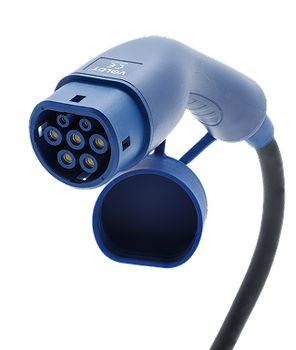
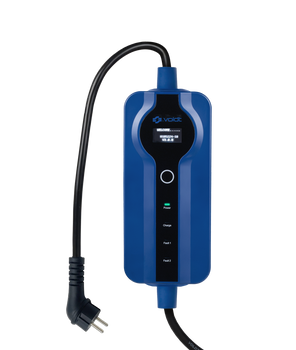

It is raining sideways, the battery is at 20%, and the cable is sitting in the boot. Can you plug in? Yes, provided your charging cable is built for it and your socket is in good condition. EV charging connectors are designed to work outdoors, but not all of them are designed for a proper British winter. The difference sits in two places: the IP rating on the connector, and the state of the cable itself. This guide covers what IP67 actually means, how to inspect a cable before wet-weather use, and the practical rules for charging in the rain without drama.
Key Takeaways
| Question | Answer |
|---|---|
| Can you charge an EV in heavy rain? | Yes, with an IP67-rated connector and a socket in good condition. |
| What does IP67 mean? | The connector survives heavy spray, mud and temporary immersion. |
| What do budget cables typically offer? | IP54 or IP55, splash resistance only. |
| What current should I use on a standard 3-pin socket? | 10A is the sensible daily default; 13A only on a dedicated, electrician-checked socket. |
| How fast is a 3-pin top-up? | Up to 2.8 kW, roughly 13 km of range per hour. |
| What should I check before plugging in? | Cracks, discoloration, moisture inside the connector, pitted pins. |
What IP Ratings Mean for Wet-Weather Charging
An IP rating tells you what a connector can take before water and dirt get where they should not. IP67 means the connector withstands heavy spray, standing water, mud and temporary immersion. That is the standard Voldt® builds to across its connectors. Much of the budget end of the market is tested only to IP54 or IP55, which covers splashes, not the puddle your connector ends up sitting in when the drive floods at 2am.
The rating on the box is only part of the story, though. A connector keeps its rating only if the housing stays sealed. Voldt® connector housings are moulded in one piece, with no glue and no screws, so there is no seam to open up over time. They are tested for more than 10,000 insertion cycles, and the contacts are silver-plated to resist the corrosion that damp British air works into cheaper unplated pins. A cable that lives outdoors, gets dropped on gravel and plugged in wet every evening needs all three of those things, not just a number printed on the plug.
For drivers using a 3-pin household socket, the Voldt® 3-pin UK granny charger pairs that IP67 connector with a current selector adjustable from 8A to 13A, delivering up to 2.8 kW and roughly 13 km of range per hour. The typical charger supplied with the car caps at 10A, around 2.3 kW and 10 km per hour, and is rarely specified for the kind of weather it will actually meet on a UK driveway.
The Socket Matters as Much as the Cable
An IP67 connector protects the car end and the cable. It does not upgrade the wall socket you plug into, so wet-weather charging starts at the house. A UK Type G socket is fine for EV top-ups when it is in good condition and not shared with high-load appliances. For routine overnight charging, set the Voldt® granny charger to 10A. The full 13A is the socket's peak, and it belongs on a dedicated socket that an electrician has checked, not on a tired ring main behind the tumble dryer.
This is where the in-cable control box earns its place. The Voldt® granny charger monitors temperature in the cable and automatically throttles the current if anything runs warm, which matters more in wet conditions, when connections are under more stress. The LCD display shows charging speed, temperature and elapsed time in real terms, so you can see at a glance that everything is behaving before you go back inside and dry off. Treat the monitoring as a safety net, not a licence to push a marginal socket harder than it deserves.
The 60-Second Cable Inspection
Wet weather accelerates wear on any charging cable, and on budget cables it tends to find the weak points within a couple of seasons. Before plugging in on a wet day, give the cable a quick once-over. Look along the full length for cracks or splits in the outer sheath, and check the connector for discoloration around the pins, which suggests heat damage. Look inside the connector casing for any sign of moisture or condensation, and check the pins themselves for pitting or green corrosion. Any one of those is a reason to stop using the cable, in any weather.
A cable that passes that check every time is the point of buying properly in the first place. Voldt® cables carry a 3-year warranty and 100-day returns, are CE, UKCA and TÜV certified, and are designed and manufactured in Europe with British and northern European weather as the baseline, not the edge case. They are rated to work from -30°C to +50°C, so the cable stays flexible on a frozen January morning instead of fighting you like a garden hose left out overnight.
Do's and Don'ts for Charging in the Rain
The rules are short and mostly common sense once the kit is right:
- Do use an IP67-rated charger for outdoor charging, and ensure connectors are dry and fully seated before energising.
- Do run a standard 3-pin socket at 10A for overnight sessions, saving 13A for a dedicated, electrician-checked socket.
- Do inspect the cable and connectors before each wet-weather session, and keep connector caps on when not in use.
- Do route the cable so connectors are not lying in standing water for hours if you can avoid it; IP67 covers temporary immersion, but there is no reason to test it nightly.
- Don't use a cable with cracks, moisture inside the connector, or pitted pins, whatever the weather.
- Don't plug into a socket that shares a circuit with high-load appliances.
- Don't use domestic extension leads or daisy-chained adapters for EV charging in the rain.
If you use public AC posts or three-phase destination chargers, the same logic applies to the cable itself. A Type 2 charging cable with IP67 connectors, like the Voldt® Type 2 Mode 3 16A 11 kW cable, gives you full weather protection at 11 kW three-phase chargers, around 50 km of range per hour, where budget IP54 cables are out of their depth. For a UK home wallbox, which runs on single-phase power at up to 7.4 kW, a 32A (22 kW) cable is the right match: the 16A cable would cap your output at 3.7 kW, half of what the wallbox can deliver. Keep in mind that the cable protects what it controls: the charging post or wallbox has its own IP rating, so check that the socket and flap are in good condition before plugging in.
Rain is not a reason to skip a charge. With the right kit and a sound socket, it is just weather. For daily top-ups in any conditions, the Voldt® 3-pin UK granny charger in the 10m length gives you safe reach from the house to the car without cord strain. European-built, weather-tested, three years backed.