



Certified European quality
EV charging cables


 Mode 3


Find your cable
Search your car
OR pick your station socket
OR pick your station socket
Pick your car socket
Voldt®: Powering the Next Century of Driving
With more than 100 years of combined experience in the automotive industry, Voldt® embodies a legacy built on engineering excellence, craftsmanship, and innovation. Our deep heritage gives us a unique understanding of mobility and the evolving needs of electric vehicle drivers. As the world shifts toward cleaner transportation, we apply a century of expertise to create charging solutions that deliver true reliability, long-lasting performance, and a quality user experience.

Accessories
Mode 3
Voldt® will integrate with your electric vehicle seamlessly.

01.
Can you extend an EV charging cable?
No, you should never extend an EV charging cable using a regular extension cord or by adding a cable between the charging station and the vehicle. EV charging cables are engineered to handle high electrical loads safely and must comply with strict international standards such as IEC 62196 and IEC 61851. Using an extension cord not designed for EV charging can lead to overheating, voltage drops, or even serious safety hazards like electrical fires. Therefore, extending an EV charging cable is both technically unsound and not legally allowed in many regions.
If your current EV cable is too short, the safest and most technically appropriate solution is to purchase a longer certified EV charging cable. At Voldt®, for instance, we offer cables in various lengths, ranging from 2 metres up to 40 metres. Our cables are CE and TÜV certified, meaning they meet the highest European safety standards. They are also made in Europe and equipped with extremely weather-resistant connectors suitable for outdoor use throughout all seasons.
It’s also important to note that most mobile EV chargers (like the Voldt® Type 2 to Schuko or Type 2 to CEE models) include features such as temperature sensors, overcurrent protection, and smart communication between the vehicle and the cable. If you add an extension cord, these safety systems may no longer function correctly, which could prevent your vehicle from charging or cause malfunctions. If you need more flexibility, the best approach is to choose a mobile charger with a longer fixed cable length tailored to your needs—without any unsafe extensions in between.

02.
What is the difference between the male and female sides of an EV charging cable plug?
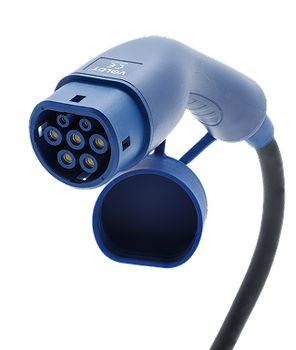
The difference between the male and female sides of an EV charging cable plug lies primarily in their intended connection points and technical design. The male side of the cable, often referred to as the charging station plug, is the end that connects to the EV charging point or wallbox. This side typically has exposed pins that deliver power and communication signals. The female side, commonly called the vehicle connector, is designed to plug into the electric vehicle's charging port and features recessed contacts to enhance safety.
Both sides conform to international standards like IEC 62196-2 (commonly known as Type 2 in Europe), but their configuration and purpose are not interchangeable. The female vehicle connector includes several safety mechanisms such as proximity detection and locking pins, which ensure a secure and tamper-proof connection with the car. In contrast, the male plug lacks these vehicle-specific features but is optimized to fit the infrastructure side of the charging interface.
This male/female distinction is also critical for regulatory and safety reasons. It prevents users from connecting two cables together to create an unauthorized extension, which could lead to overheating, communication errors, or electrical hazards. By ensuring the cable only connects from the station to the car in one direction, the EV charging system maintains proper current flow, grounding, and handshake protocols, which are essential for safe and efficient charging.

03.
In what order do you charge your electric car?
To charge your electric car safely and correctly, follow these steps in the right order: first, make sure your car is parked and switched off.
Then, connect the charging cable to the charging station or wall socket first, and only after that connect it to the vehicle. If you're using a Mode 2 cable (with an in-cable control box for household sockets), make sure the control box is positioned properly before plugging it into the car. The car and charging system will usually communicate automatically, and charging should begin without any extra steps.
To finish charging, always disconnect the cable from the car first, and then unplug it from the charging station or wall socket. This prevents electrical arcing and ensures a safer disconnection. Always monitor the charging status during the session via your car’s display or the charging point’s indicator lights.

04.
What is mode 3 charging EV?
Mode 3 charging for an electric vehicle (EV) is a charging method where the EV is charged via a dedicated charging station or wallbox, with controlled and secure communication between the car and the charging point. It is the most commonly used and recommended way to charge at home and at public charging stations.
Key Features of Mode 3 Charging:
- Direct connection to a charging station
- Safety and Intelligence
- Charging Power
- Smart Charging
Advantages of Mode 3 Charging:
✔️ Faster charging than a standard household socket (Mode 2).
✔️ Ensures safety with built-in communication and protection mechanisms.
✔️ Efficient energy management with smart charging functionalities.
Comparison with Other Charging Modes:
- Mode 1: No communication between the power source and the vehicle (an outdated and not recommended method).
- Mode 2: Charging via an electrical socket using a special cable where a computer in the cable handles the communication.
- Mode 4: DC fast charging (e.g., CHAdeMO or CCS) where direct current is supplied straight to the battery, often up to 350 kW.
In summary, Mode 3 is the standard and recommended method for daily EV charging, especially at home and public charging points. 🚗⚡

05.
Do Voldt charging cables lose power due to their length?
No noticeable power loss, even with longer cables
No, Voldt charging cables do not experience any significant power loss due to their length. Voldt uses only high-quality copper conductors with low resistance, ensuring that even longer cables (such as 10 or 15 metres) can efficiently transmit current without noticeable voltage drop. The cables are designed according to international standards (such as IEC 61851 and IEC 62196), which specify maximum allowable voltage drop and heat development, so charging performance remains optimal.
Optimal conductor size prevents voltage drop
In theory, longer charging cables could lead to some power loss, particularly if the cable has a thin conductor or is made from lower-quality materials. Voldt prevents this by using conductors with appropriate cross-sectional area depending on the cable’s maximum current rating (e.g. 6 mm² for 32A 3-phase cables). This keeps voltage drop to negligible levels—typically less than 1%—which is well within regulatory limits. This is crucial for both safety and charging efficiency.
Tested for performance and safety
Finally, all Voldt cables are rigorously tested for electrical performance, temperature rise, and reliability under load. Customers can trust that even a 15-metre cable performs just as well as a shorter one. This makes Voldt cables ideal for situations where the charging point is further away from the vehicle, without compromising on speed or safety.

06.
What warranty do I get?
All Voldt® charging cables include a 3-year full warranty and 100 days of hassle-free returns. We stand behind the quality of our European-made products, which are tested to meet the highest standards of safety and durability. Every cable is built to last. If something isn’t right, we’ll make it right: whether that means a quick replacement, repair, or return. It’s our way of ensuring you can charge with complete confidence, every time.
07.
Do the cables fit all UK stations?
Yes, all Voldt® charging cables are fully compatible with every UK and EU Type 2 charging station. The connectors meet the IEC 62196-2 standard, which is the universal Type 2 specification used across Europe. This means the cables can be used at public charging points, wall boxes, and home stations without any adapters or modifications. Each plug is precision-engineered to ensure a secure, weatherproof connection and optimal power transfer, providing consistent, dependable performance at every certified charging location.
08.
What is the difference between Mode 1, Mode 2, Mode 3 and Mode 4 charging?
The difference between Mode 1, Mode 2, Mode 3, and Mode 4 charging lies in the level of communication and safety between the electric vehicle (EV), the charging cable, and the power source, as well as the type of current used (AC or DC). Each mode represents a different way of delivering electricity to an EV, with increasing levels of control and safety from Mode 1 to Mode 4.
Mode 1 charging is the most basic and outdated form of EV charging. It involves a simple cable that connects an EV directly to a standard household socket (AC), with no built-in communication or safety features. The cable lacks a control box, so there's no way to verify if the vehicle is drawing power safely. As a result, Mode 1 is rarely used for modern EVs due to high risks such as overheating, electric shock, and potential fire hazards. It is also not compliant with many international safety standards, and is banned in several regions.
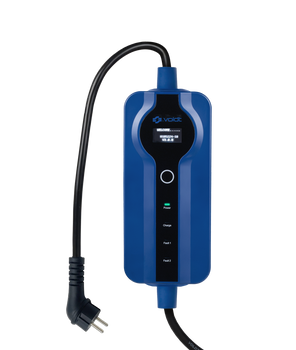
Mode 2 charging improves on Mode 1 by adding an In-Cable Control and Protection Device (IC-CPD). This allows the charging cable to plug into a standard socket (usually Schuko or BS 1363) while integrating basic safety functions like temperature monitoring and earth leakage protection. The IC-CPD enables limited communication between the cable and the vehicle, typically restricting the current to safe levels (usually up to 10 A or 13 A). This makes Mode 2 a practical solution for occasional or emergency charging at home, but it’s not ideal for regular use due to slower charging speeds and stress on domestic wiring.
Mode 3 charging involves dedicated EV charging stations connected to the AC grid, using a Type 1 or Type 2 connector and enabling full communication between the EV and the charging infrastructure. These stations can deliver higher current levels (typically up to 32 A or even 63 A), resulting in faster charging. Mode 3 setups include advanced safety protocols such as automatic power cut-off, dynamic load management, and secure identification. This is the standard mode for public AC charging points and home wallboxes across Europe, especially using Type 2 connectors in accordance with IEC 61851.
Mode 4 charging is used exclusively for DC fast charging. In this mode, the AC to DC conversion happens within the external charger, not inside the vehicle, allowing for much higher power delivery—typically from 50 kW up to 350 kW. It requires heavy-duty connectors like CCS (Combined Charging System) or CHAdeMO and involves constant, high-level communication between the vehicle and the charger for current regulation, battery monitoring, and thermal management. Mode 4 is ideal for quick top-ups on motorways or commercial fleets and is governed by standards like IEC 61851-23 and IEC 62196-3.
In summary, Modes 1 and 2 are for basic or household charging (AC), Mode 3 is the most common AC charging method with integrated safety and communication, and Mode 4 is used for rapid DC charging with full system integration and high power delivery.

09.
What is temperature protection in EV charging cables?
Temperature protection in EV charging cables is a built-in safety feature that automatically prevents overheating during the charging process. It continuously monitors the temperature at critical contact points—typically in the plug or control box—and interrupts or limits power flow if the temperature exceeds a safe threshold. This is essential to prevent damage to the cable, plug, vehicle inlet, or household socket, especially when charging at higher currents such as 16A or 32A.
How it works technically
In Voldt® charging cables with temperature protection, integrated sensors—often thermistors or thermal fuses—are positioned near the plug contacts and control circuitry. These sensors communicate with the control unit (IC-CPD in Mode 2 chargers, or the car's onboard system in Mode 3) to regulate or stop the current when a critical temperature is reached, usually between 70°C and 90°C depending on the component. For example, Voldt®’s mobile charging cable includes this feature in the plug housing to protect household sockets, which are less robust than dedicated charging stations.
Why temperature protection is crucial for safety and durability
Overheating is one of the leading causes of EV charging malfunctions and fire hazards, especially with cheaper cables lacking certification. Long charging sessions, poorly ventilated areas, or worn-out sockets can all lead to heat buildup. With temperature protection, the cable can proactively detect unsafe conditions and shut down charging before any damage occurs. This not only enhances user safety but also extends the lifespan of both the cable and the vehicle’s charging inlet.
Voldt® cables with built-in thermal protection
All Voldt® mobile chargers are equipped with advanced temperature monitoring, CE and TÜV certified for reliability. This makes them suitable even for older or less stable socket installations. In addition, Voldt®’s robust plug designs—crafted with European-grade materials—are engineered for excellent thermal conductivity and heat dissipation, further enhancing safety during daily use. When choosing a charging cable, always verify the presence of temperature protection for peace of mind and long-term performance.

10.
What is grounding protection (earth protection) in EV charging?
Grounding protection (also known as earth protection) is a critical safety feature in electric vehicle (EV) charging systems that prevents electrical shock and protects both users and equipment. It ensures that any fault current—such as leakage or a short circuit—is safely directed to the ground (earth) rather than through the vehicle or user. All Voldt® charging cables and adapters are equipped with integrated grounding protection that meets CE and TÜV standards.
Why grounding is essential for EV charging
When you charge your EV, the charging system operates at high voltages (usually 230V single-phase or 400V three-phase). If there is a fault in the cable, plug, or vehicle inlet, dangerous voltages could be exposed. Grounding protection ensures that such faults are instantly detected and the circuit is safely disconnected. This protects not only people from electric shock but also the EV’s sensitive electronics.
How grounding protection works
Grounding protection in Voldt® products works in conjunction with built-in fault detection systems. When the cable is connected, the internal electronics continuously monitor for proper grounding. If the system detects that the grounding is missing, weak, or faulty—such as in the case of a broken earth wire—the charging process will not start or will immediately shut down. In Mode 2 charging cables (like the Voldt® mobile charger), a built-in control box with an integrated RCD (Residual Current Device) adds an extra layer of protection.
Grounding compliance in Europe and the UK
In the UK and EU, grounding (earthing) is a legal requirement for all fixed and mobile EV charging equipment. Voldt® products are built in Europe and conform to all local electrical safety standards. This includes compliance with IEC 62752 for Mode 2 devices and IEC 61851 for Mode 3 cables. For portable charging with domestic sockets (like the Voldt® Type 2 to UK plug charger), grounding becomes even more crucial due to the variability of household wiring. That's why Voldt® only offers fully grounded, tested, and certified cables that ensure safe operation in any environment.

Designed and Manufactured in Europe
European engineering is more than a mark of origin; it is the cornerstone of Voldt®'s identity. Our products are designed and manufactured in Europe, with rigorous quality and safety controls at every stage.
Every electric car charging cable, portable charger, or component that carries the Voldt® name is CE, UKCA and TÜV certified and built to automotive-grade standards.
Our commitment to European production allows us to continually refine our manufacturing techniques. The result is charging equipment that blends precision engineering with refined design.

Quality Materials Built for Real-World Performance
We believe that the quality of the materials defines the quality of the charge. That's why all Voldt® charging solutions are built from carefully selected, certified components.
100% Copper Conductors
Every Voldt® electric car charging cable is constructed using 100% pure copper with silver-plated contacts, for low-resistance conduction. This ensures efficient charging and less heat build-up, especially during long charging cycles or high-power sessions.
One-Piece Moulded Plugs for a Long Service Life
Our plugs are moulded from a single piece of high-impact thermoplastic, with no glue and no screws. This construction reduces internal stress points and ensures long-term reliability, even with heavy daily use.
Engineered for Harsh Conditions
From cold winters to hot summer days, our cables, chargers, and adapters are designed to withstand Europe's diverse climates. Abrasion-resistant jackets, impact-proof housings, and weather-sealed electronics ensure dependable charging performance anywhere.
Quality materials are the foundation of Voldt®. They deliver reliable performance, longer product life, and a safer charging experience for every EV driver.

A Complete Range of EV Charging Solutions
Voldt® offers a wide range of charging products across 12 European markets, designed to meet the needs of private EV owners, businesses, and fleet operators.
Electric Car Charging Cables (Type 2 & More)
Our flagship product category includes a wide range of electric car charging cables, with Type 2 to Type 2, Type 2 to Type 1, and reinforced heavy-duty variants.
Each cable is engineered for efficient power transfer, secure connectivity, and a long service life.
Portable EV Chargers
Ideal for home use, travel, and emergency charging. Our portable EV chargers feature adjustable power settings, intelligent safety systems, and rugged housings built for outdoor use.
CCS2 Charging Components & Adapters
Built for fast-charging compatibility, our CCS2 adapters and components support modern EVs that require higher charging speeds. They are tested and certified to European safety standards.
Charging Accessories & Protection
From cable organisers to storage bags, connector caps, wall hooks, and replacement parts, Voldt® provides everything drivers need to keep their charging setup organised and protected.
Customised Charging Solutions
For businesses, installers, and fleet operators, Voldt® offers custom-built charging solutions.
Whether tailored cable lengths, branded components, or specialised adapters, we engineer bespoke products to meet unique requirements, always with the same high standards of safety and durability.

Three-Year Full Warranty, Certified Quality Across the Board
Confidence in our products allows us to offer a three-year full warranty on every Voldt® charging solution.
This comprehensive coverage reflects our dedication to durability, engineering excellence, and customer support. Should anything arise, our expert service team provides fast, professional assistance.
What Drives Us: Safety, Quality, and Innovation
At Voldt®, our mission extends beyond providing exceptional charging equipment. We are committed to building products that last and that meet strict, verifiable standards.
Voldt®'s mission extends beyond building exceptional hardware. We are committed to:
- Safety; implementing advanced protection systems in every product.
- Quality; using long-lasting materials and precise manufacturing.
- Innovation; continuously refining design, testing new technologies, and anticipating future EV charging needs.
As electric mobility accelerates, we are building the infrastructure that supports it, with products you can verify and trust.
Our dedication to innovation means we continuously look ahead, anticipating the needs of drivers, designing solutions that simplify the charging experience, and setting new standards of quality and performance across the industry.
