




Published 29/09/2026 · Updated 29/09/2026 · By Voldt® product team
UK buyers can get up to £3 750 off a new electric car priced at or under £37 000, company car drivers pay 4% benefit in kind in 2026/27, and renters and flat owners can claim up to £500 towards a home charge point. EVs have paid vehicle tax since April 2025, and since 2 January 2026 electric cars pay the London Congestion Charge with a 25% discount.

8 schemes
for EV drivers in the UK, 29/09/2026
Every scheme at a glance
Every UK scheme for electric car drivers, 29 September 2026
Electric Car Grant
New EVs at or under £37 000
Up to £3 750 off
OpenVehicle tax (VED)
EVs registered from 1 April 2025
£10 in year one, then £200
ChangingCompany car tax
Fully electric company cars
4% in 2026/27
Company carChargepoint grant
Renters and flat owners with off-street parking
75%, up to £500
OpenOn-street charging grant
Households installing a cross-pavement solution
Up to £500
OpenHome charging repayment
Company car drivers
Tax-free with proof
Company carScotland home charge point grant
Rural and island households, income up to £50 000
Up to £400
RegionalLondon Congestion Charge
Electric cars on Auto Pay
25% discount
Regional01 · Buying
What does the Electric Car Grant give you?
Up to £3 750 off a new EV in Band 1, or up to £1 500 in Band 2, as long as the car costs no more than £37 000.
The Electric Car Grant takes up to £3 750 off the price of a new electric car in Band 1, or up to £1 500 in Band 2, as long as the car costs no more than £37 000 (GOV.UK). The band is set per model, so check it before you choose between two cars at a similar price: the difference can be £2 250.
The grant comes off the price at the dealer, so there is nothing to claim afterwards. It covers new cars only, so a used EV gets no grant in the UK.
Fig. 1
What the Electric Car Grant is worth

Up to £3 750
Band 1: new EV at or under £37 000
Taken off the price
Up to £1 500
Band 2: new EV at or under £37 000
Band set per model
Source: GOV.UK. Checked 29/09/2026.
Voldt® tip
Check the car's band and list price before you order. Two cars at a similar price can sit in different bands.
02 · Vehicle tax
What does an electric car pay in vehicle tax?
£10 in the first year, then £200 a year, plus £440 a year for five years above a £50 000 list price.
Since 1 April 2025, electric cars pay vehicle tax like other cars. An EV registered from that date pays £10 in the first year and then the standard rate of £200 a year in 2026/27. If its list price is above £50 000, the expensive car supplement adds £440 a year for five years, starting in the second year (GOV.UK).
03 · Company cars
How much company car tax does an electric car pay?
4% of the list price in 2026/27, rising to 5%, 7% and 9% by 2029/30. Plug-in hybrids jump to 18% in 2028/29.
The appropriate percentage for a fully electric company car is 4% in 2026/27 and 5% in 2027/28. It then rises by two points a year, to 7% in 2028/29 and 9% in 2029/30, while cars with 1 to 50 g/km of CO2, mostly plug-in hybrids, move to 18% and 19% regardless of their electric range (GOV.UK policy paper, October 2024).
If your employer repays your home charging, HMRC asks for proof that the electricity went into the company car, and a session log provides it. Our reimbursement rules for 12 countries cover the details.
Voldt® tip
If you are choosing between an EV and a plug-in hybrid as a company car on a contract beyond April 2028, compare the rates for the later years: from April 2028 a plug-in hybrid pays 18% against 7% for an EV.
04 · Home charging
Can you get a grant for a home charge point?
Yes, if you rent or own and live in a flat with off-street parking: 75% of the cost, up to £500. Households with only on-street parking have their own grant.
The chargepoint grant for renters and flat owners covers 75% of buying and installing a charge point socket, up to £500 since 1 April 2026. You need your own off-street parking, an eligible car and an OZEV-authorised installer, and funding is confirmed until 31 March 2027 (GOV.UK).
Households with only on-street parking can get up to £500 towards a charge point when they also install a cross-pavement solution, such as a cable channel. The cross-pavement solution must be permanent (GOV.UK).
Fig. 2
What the chargepoint grant asks of you
You rent, or own and live in a flat
Your own off-street parking
An eligible car
An OZEV-authorised installer
A charger you plug in yourself
75% of the cost, up to £500. Funding confirmed until 31/03/2027.
Source: GOV.UK. Checked 29/09/2026.
Voldt® tip
Book an OZEV-authorised installer before you buy a charge point. The grant only pays through one, and only for an installed socket.
05 · Scotland
What does Scotland add?
A home charge point grant of up to £400 for rural and island households, and a cross-pavement grant of up to £3 500.
The domestic charge point grant is funded by Transport Scotland and run by the Energy Saving Trust. It gives up to £400 towards installing a home charge point if you live in a rural or remote area of Scotland, including the islands, have or will soon have an EV, and have a household income of £50 000 or less (Energy Saving Trust, 2026/27 criteria).
The installer must be approved by both the Energy Saving Trust and OZEV, and the grant cannot fund work that starts before you receive the offer letter. Scotland also funds cross-pavement charging solutions with up to £3 500 (Energy Saving Trust).
06 · London
What do EVs pay in London?
Since 2 January 2026, electric cars on Auto Pay get a 25% discount on the Congestion Charge and pay £13,50 a day.
The 100% Cleaner Vehicle Discount ended on 25 December 2025. Since 2 January 2026, electric cars registered for Auto Pay get a 25% discount on the daily charge, so they pay £13,50 a day; the standard charge is £18. For new applicants, the 90% Residents' Discount only applies to electric vehicles (TfL, 2026).
07 · What changes
What changes over the next few years?
The key dates for EV drivers in the UK.
Fig. 3
What changes for EV drivers
Source: GOV.UK. Checked 29/09/2026.
08 · Other countries
How do other countries compare?
Four more countries pay towards buying an EV. In our comparison of 12 countries, only the Netherlands and Germany pay households for charging.
Germany, France, Spain and Sweden pay towards the purchase, and Italy, Spain and Sweden support a home charger. The Netherlands pays per kWh charged at home, but only with a charging point that has a built-in MID meter.
Fig. 4
The headline scheme in each country
Source: national governments and scheme operators. Checked 29/09/2026.
09 · Without a charge point
What if you can't install a charge point?
Then the grants do not apply, and a portable charger from a 3-pin socket is the practical route.
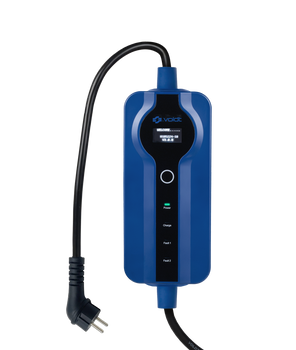
The Voldt® 3-pin portable charger plugs into a standard UK socket, charges at 8 to 13 A, up to 2,8 kW, and its app logs the kWh of every charge per user. That record helps if your employer repays home charging. Nothing is installed, so it moves house with you.
Our verdict
Claim the Electric Car Grant on a new car at or under £37 000, and check its band before you choose. If you rent or live in a flat with off-street parking, the chargepoint grant pays through an OZEV-authorised installer; in rural Scotland, check the £400 grant first.
01
Check the car's grant band and list price before you order.
02
Book an OZEV-authorised installer before you buy a charge point.
03
Register your EV for Auto Pay if you drive into central London.
Buy it if
you rent or cannot install a charge point, and you park within reach of a 3-pin socket.
Skip it if
you qualify for the chargepoint grant with off-street parking, or you park on the street, where the on-street grant supports a cross-pavement solution.
Voldt® portable charger
3-pin portable charger with app
8 to 13 A · up to 2,8 kW · 3-pin to Type 2. Logs the kWh of every charge, per user.
Safe use and warranty
- Plug the charger straight into a sound, earthed 3-pin socket, never an extension lead or adaptor.
- Use the 13 A setting only on a socket on its own circuit that an electrician has checked.
- Where your car's manual differs from this guide, follow the manual.
Voldt® cables and portable chargers are CE and UKCA marked and TÜV certified, with a 3-year warranty; terms and exclusions are on the warranty and complaints page.
CE · UKCA · TÜV · IP67 · 3-year warranty · 100-day returns
Frequently asked questions
Does the Electric Car Grant cover used cars?
No. It takes money off the price of new, eligible electric cars priced at or under £37 000.
Do I pay vehicle tax on an electric car?
Yes, since April 2025: £10 in the first year, then £200 a year, plus £440 a year for five years if the list price is above £50 000.
What company car tax does an EV pay?
4% of the list price in 2026/27, 5% in 2027/28, 7% in 2028/29 and 9% in 2029/30.
Who can get the chargepoint grant?
Renters and people who own and live in a flat, with their own off-street parking. Households with only on-street parking can use the on-street grant with a cross-pavement solution.
Is there a separate grant in Scotland?
Yes. Rural and island households with an income of £50 000 or less can get up to £400 towards a home charge point.
Do electric cars pay the London Congestion Charge?
Yes, since 2 January 2026. Electric cars on Auto Pay get a 25% discount and pay £13,50 a day.
Does a portable charger qualify for the chargepoint grant?
No. The grant covers buying and installing a charge point socket by an OZEV-authorised installer.
Voldt® product team, product development and support
Develops Voldt® charging cables and portable chargers and answers the questions that reach Voldt® support.