



You're standing by your car and the charging cable is stuck. What now? In most cases, this problem is easy to solve without any tools. In this article, we explain step by step what you can do if the charging cable is stuck in the car or if the charging plug cannot be removed.
Key points
| Question | Short answer |
|---|---|
| Why is my charging cable stuck? | The car automatically locks the cable during charging. This is normal and is intended as a safety feature. |
| What should I do first? | Stop charging via the app or the car's display before trying to pull the cable out. |
| Does pulling harder help? | No. Forcing a locked charging plug out damages the car's charging port. |
| What if the car is locked? | Unlock the car first. Many EVs automatically lock the charging port when the car is locked. |
| Can cold weather cause the cable to stick? | Yes. In freezing weather, the charging port can freeze, causing the charging cable to get stuck in the car. |
| When should I call a mechanic? | If the cable is still stuck after going through all the steps below, or if you see an error message on the display. |
Why does a charging cable get stuck?
A charging cable stuck in the car is, in most cases, not a defect but a safety feature. Electric cars automatically lock the charging port as soon as charging begins. This prevents anyone from accidentally or deliberately pulling the cable loose while current is flowing through it. The lock only releases once the charging session has been properly ended.
There are four common reasons why a charging cable gets stuck after charging:
The charging session is still active. As long as the car is receiving power or the session has not been ended, the lock remains engaged. This is the most common reason.
The car is locked. Many models automatically lock the charging port when central locking is engaged. Unlock the car first before trying to remove the cable.
Freezing weather. At sub-zero temperatures, moisture in the charging port can freeze. The charging plug then becomes mechanically stuck, separately from the electronic lock.
A software glitch or defect. In rare cases, the lock fails to respond correctly due to a software error or a mechanical problem in the charging port itself.

Step by step: how to release the charging cable
Follow these steps in order (in 90% of cases, the problem is solved within the first 2 steps).
- Stop charging. Use your car's app, the charging point, or the in-car display to end the charging session. Wait until the display or indicator shows that charging has stopped.
- Unlock the car. Use the key, the app, or the button on the charging flap to unlock the car. Then try to pull the cable straight back gently, without twisting or wiggling.
- Wait a moment. Some cars have a short delay between stopping the charging session and unlocking the port. Wait 10 to 30 seconds and try again.
- Restart the car. Get in, start the car, then turn it off again. On many models, this resets the charging port controls.
- Use the emergency release. Most EVs have a mechanical emergency release for the charging port. It's typically located in the boot, behind a panel, or near the fuse box. Check your car's manual for the exact location.
- Call customer service or roadside assistance. If none of the steps above work, there may be a fault with the lock. Do not try to force the cable out.
Specific situations: what to do
Charging cable stuck in the car at a public charging station
At a public charging station, you can often stop the session via the charging network's app or by holding your charging card to the reader again. If that doesn't work, use the display or the emergency stop button on the station. If the problem persists, contact the charging network's customer service; they can end the session remotely and release the lock.
Removing the charging plug from a frozen charging port
If the charging cable is stuck due to cold, do not use boiling water or an open flame to defrost the port. This will damage the electrical components. Use a commercial de-icing product suitable for electric vehicles, or move the car to a heated garage and wait for the port to warm up. Then follow the normal steps to stop the session and remove the cable.
Cable stuck after a fault or error message
Do you see an error code or warning on the display? Make a note of it and consult the manual or the manufacturer's customer service. Try restarting the car, then start a new charging session and stop it immediately. Some models have a specific reset procedure for the charging port described in the manual.
How do you prevent a charging cable from getting stuck?
Most problems with a charging cable stuck in the car can be prevented with a consistent routine. Always end the charging session via the app or display before trying to remove the cable. Never pull on the cable while charging is still active.
Keep the charging port clean and dry. Close the charging port flap when you are not charging, so dirt and moisture cannot get in. In winter, a light layer of silicone spray on the seal helps prevent freezing. Never use grease or oil, as these attract dust and can damage the seal.
Always use a cable that matches your car's specifications. A cable that fits too tightly or doesn't connect properly to the connector increases the risk of wear on the charging port, which can eventually lead to issues with locking or removal.
When should you replace your charging cable?
A charging cable that regularly gets stuck, shows kinks at the connector, or has visible wear on the insulation or plug deserves to be replaced. A damaged cable is not only impractical, it's also a safety risk. Check the cable regularly for cracks, discoloration, or deformation at the connection points.
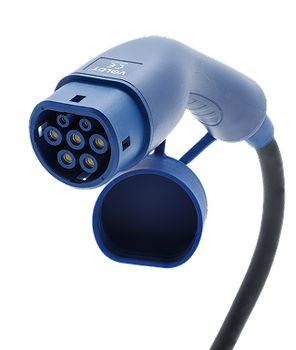
When replacing it, choose a certified cable that meets your car's charging specifications. For most EVs in Europe, that means a Type 2 cable, available in 11 kW and 22 kW, and in straight or coiled form depending on your charging situation.
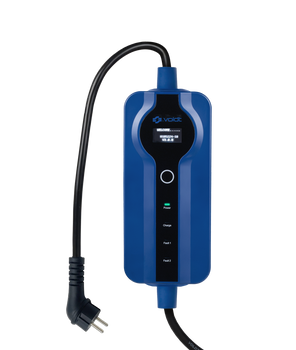
Voldt® offers a range of certified Type 2 charging cables, available in both straight and coiled versions, suitable for 11 kW and 22 kW. View the full Voldt® charging cable range.
Frequently asked questions
Can I pull on the charging cable if it's stuck?
No. Forcing a charging cable that's stuck in the car damages the charging port lock and the cable connector. Always follow the steps to properly end the charging session and unlock the car first.
What is the charging port emergency release?
The emergency release is a mechanical lever or cable that lets you manually open the charging port if the electronic lock isn't working. The location varies by make and model. Look in your car's manual under "charging port" or "emergency release". On most models, it's located in the boot or behind a panel near the charging point.
Can a software update fix the problem?
Yes, in some cases it can. If the charging port regularly fails to unlock for no clear reason, an outstanding software update from the manufacturer may be the cause. Check via the app or infotainment system for available updates and install them.
Does every Type 2 cable work on every EV?
Type 2 is the European standard and works on virtually all EVs and PHEVs sold in Europe. However, do check your car's maximum charging power: a 22 kW cable will also work on a car with a maximum of 11 kW, but it won't charge any faster than the car allows. Conversely, an 11 kW cable on a car with 22 kW capacity will limit your charging speed.
What do I do if the charging cable is stuck and I need the car?
If the charging session has been properly ended and the car is unlocked but the cable is still stuck, use the emergency release described in your manual. If that doesn't work either, call roadside assistance or your car brand's customer service. They have the tools and procedures to safely open the port without causing damage.
