



You have an electric car and a charging point, but are you also charging smart? Smart charging means you don't just plug in your EV, but control when and how fast you charge. The result: lower electricity costs, less strain on the grid, and in some cases even income. In this article we explain how it works and what you can concretely save with it.
Key points
| Question | Short answer |
|---|---|
| What is smart EV charging? | Automatic charging at moments when electricity is cheap or sustainable, controlled by an app or wallbox. |
| How much can you save with smart charging? | Up to 40% on charging costs compared to uncontrolled charging during peak hours. |
| Do I need a special wallbox? | Yes, a smart wallbox with internet connection and app control is required. |
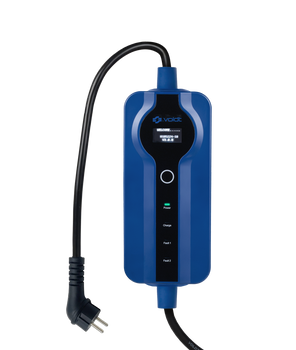
| What are smart charging cables? | Cables that are compatible with smart charging systems and have the right specifications for your wallbox. |
| Can I feed energy back to the grid? | Yes, with Vehicle-to-Grid (V2G) technology, but this requires specific hardware and a suitable contract. |
| Does smart charging work with any energy contract? | No, you need a dynamic or variable tariff to benefit optimally. |
What exactly is smart charging?
Smart charging is the automated control of your charging session based on external signals: the electricity price, the load on the grid, or the share of renewable energy at that moment. In practice, you set via an app or wallbox when your car needs to be charged, and the system itself determines the optimal charging moment within that window.
The difference with normal charging is simple: with normal charging, the car starts charging immediately as soon as you connect the cable, regardless of whether electricity is expensive or cheap at that moment. With smart charging, the system waits for the cheapest or greenest moment within the time window you have set. You don't have to do anything yourself once you have configured the settings.
The basis for smart charging is a dynamic or variable energy tariff combined with a smart wallbox. Without those two components, the gain is limited to manual planning, which is less effective and less convenient.

How do you save money with smart charging?
Saving money on charging is largely about timing. Electricity tariffs vary throughout the day, with peak prices typically between 5 and 9 PM and low rates at night and in the early morning. The price difference between peak and off-peak can rise to a factor of three or more on dynamic contracts.
Using dynamic tariffs and off-peak hours
With a dynamic energy contract, you pay the actual market price per hour. A smart charging system follows those prices automatically and schedules the charging session in the cheapest hours, typically between 11 PM and 6 AM. For an average EV driver who consumes 40 kWh daily for their car, this can yield savings of several hundred pounds per year compared to uncontrolled charging.
Combining solar panels with smart charging
Do you have solar panels? Then you can set up smart charging so that the car preferably charges when there is overproduction, that is, when the panels deliver more than the household consumes. That surplus would otherwise go back to the grid, where you receive less and less for it. By charging that energy directly into your car, you use it at the highest value.
Peak avoidance and grid congestion
In more and more places the electricity grid is overloaded at peak times. Some grid operators offer discounts or compensation to drivers who shift their charging session to quiet hours. Smart EV charging makes it possible to respond to those signals automatically, without you having to do anything yourself.
What do you need for smart charging?
Smart charging requires a combination of the right hardware, software, and a suitable energy contract. Below is an overview of what you need and what each component contributes.
| Component | What it does | Necessary? |
|---|---|---|
| Smart wallbox | Controls charging power based on price signals or solar yield | Yes |
| App or energy management system | Setting charging window, tariff coupling and reporting | Yes |
| Dynamic or variable energy contract | Enables savings based on hourly prices | Yes |
| Smart meter (P1 port) | Provides real-time consumption data to the charging system | Recommended |
| Solar panels | Enables charging on self-generated energy | Optional |
| V2G-compatible car and wallbox | Enables feeding energy back to the grid | Optional |
Smart charging cables: what is the role of the cable?
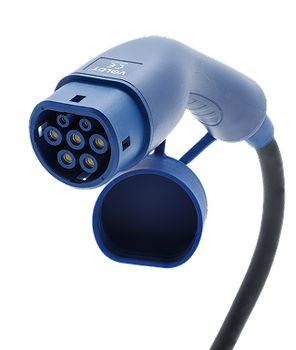
The cable itself is not an active part of the smart charging system, but choosing the right smart charging cables is still relevant. A cable must be compatible with the specifications of your wallbox and your car to support the full functionality of smart charging. A cable that cannot handle the maximum power of your wallbox is the weakest link in the chain and limits both the charging speed and the efficiency of the system.
For smart charging at home, you typically use a tethered cable attached to the wallbox, or a separate Type 2 cable. Always choose a cable that is certified for the power of your wallbox, whether that is 11 kW or 22 kW. A quality cable ensures stable communication between the car and the wallbox, which is essential for correct control of the charging session.
Voldt® offers an extensive range of Type 2 charging cables, certified for both 11 kW and 22 kW, in straight and coiled versions. View the full Voldt® charging cable range.
Vehicle-to-Grid: your car as an energy buffer
The most advanced form of smart charging is Vehicle-to-Grid, or V2G. This is when your car feeds energy back to the electricity grid or to your own home at moments when demand is high or the price is favourable. Your battery then acts as a large home battery that automatically charges when electricity is cheap and discharges when electricity is expensive.
V2G is still limitedly available. It requires a bidirectional wallbox, a car that supports V2G, and an energy contract that allows feed-in via the charging point. Models such as the Nissan Leaf and some Hyundai and Kia models already support V2G. The expectation is that more manufacturers will offer this as standard in the coming years.
For drivers who cannot yet apply V2G, Vehicle-to-Home (V2H) is an alternative. With this, the car feeds energy back to its own household instead of to the grid, which involves less regulation and is in some cases already available.
How much can you concretely save?
The savings with smart charging depend on your driving behaviour, your energy contract, and your charging infrastructure. The table below gives an indication based on an average EV driver with an annual charging consumption of approximately 3,000 kWh.
| Scenario | Average cost per year | Savings vs. uncontrolled charging |
|---|---|---|
| Uncontrolled charging, fixed tariff | £540 | Reference |
| Manual off-peak charging, fixed tariff | £378 | Approx. 30% |
| Smart charging, dynamic tariff | £270 | Approx. 50% |
| Smart charging + solar panels | £135 or less | Up to 75% or more |
These amounts are indicative and based on an average dynamic off-peak rate of 0.09 per kWh versus a peak rate of 0.28 per kWh. The actual savings depend on your contract, consumption, and location.
