


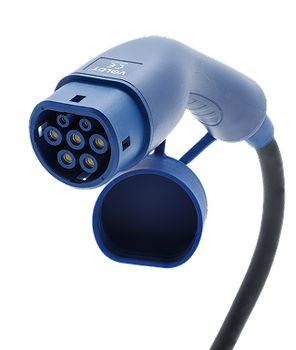
Type 1 charging cable


Accessories
Join 100,000+ EV drivers across Europe, from the Netherlands to Norway, who trust Voldt® to keep them powered every day, everywhere.
Loading reviews...


 Mode 3


This category brings together Voldt® Type 1 charging cables, developed for electric vehicles equipped with a Type 1 connector, enabling safe charging on European infrastructures with a Type 2 socket. Although Type 2 is currently the dominant standard in Europe, many older or imported vehicles still use Type 1, making this category essential to ensure continued compatibility and correct use of the available charging points.
Here you will find Type 1 charging cables designed for regular use, with a focus on electrical reliability, durable materials, and real compatibility with both domestic and public installations. Voldt® designs and manufactures these cables in Europe, with clear certifications and a practical approach intended for long-term use.
A Type 1 charging cable is used when an electric vehicle has a Type 1 inlet and needs to be connected to a compatible charging point, typically with a Type 2 socket. In these scenarios, the cable acts as a direct connection between the vehicle and the infrastructure, without integrated active electronics.
This type of solution is common when:
The vehicle uses a Type 1 connector
Charging takes place using alternating current (AC)
A stable and dedicated charging infrastructure is available
No electronic control is required within the cable itself
The Type 1 charging cable is a straightforward and predictable solution, suitable for users who charge regularly at fixed or well-known locations.
The Type 1 home charging cable is frequently used in private garages, residential parking areas, or compatible wallboxes. In these contexts, the simplicity of the cable is an advantage, as charging control is handled by the vehicle and the existing infrastructure.
This type of use is particularly beneficial when:
The electrical installation is stable
Charging occurs on a recurring basis
The vehicle remains parked for extended periods
For many users, home charging with Type 1 remains a practical and fully functional solution.
Within this category, there are clear variations in supported current capacity, which directly affect charging performance.
Type 1 charging cables rated at 16A are suitable when:
The vehicle has current limitations
The electrical installation is more conservative
Charging takes place overnight or over long periods
Type 1 charging cables rated at 32A allow:
Better use of the installation’s available capacity
Reduced overall charging time
Greater flexibility across different scenarios
Choosing correctly between 16A and 32A prevents artificial limitations and ensures more efficient use of the charging system.
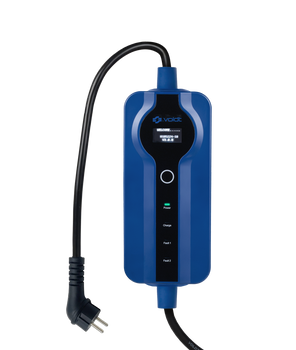
In some contexts, the Type 1 Mode 2 charging cable is confused with passive cables. The key difference is that Mode 2 integrates a control unit into the charging system, while the cables presented in this category function as a direct connection between the vehicle and the infrastructure.
This distinction is important because:
Mode 2 is mainly used with standard electrical sockets
The direct Type 1 cable relies on the infrastructure for control
An incorrect choice may limit compatibility or safety
Understanding this difference helps in selecting the correct Type 1 charging cable for each specific scenario.
Despite not incorporating active electronics, Type 1 cables require a high level of build quality. High currents over extended periods place real demands on materials, connectors, and insulation.
Voldt® cables are designed to provide:
Firm and stable connections
Resistance to wear from frequent use
Consistent performance over time
This approach ensures that the Type 1 charging cable maintains its reliability even after many charging cycles.
This collection of Type 1 charging cables is particularly suitable for:
Owners of electric vehicles with a Type 1 connector
Users of Type 2 charging points
Those looking for a simple and direct solution
Older vehicles that remain fully functional
For newer vehicles with a Type 2 inlet, other categories may be more appropriate. However, for Type 1 users, this collection remains essential.
Like all Voldt® products, the cables in this category are developed and manufactured in Europe. The priority is clear: to offer technically correct, durable solutions aligned with real user needs.
Rather than relying on improvised adapters, these cables provide a dedicated, predictable connection designed for continuous use.
When selecting a Type 1 charging cable, it is essential to check:
The vehicle’s connector type
The maximum supported current
The usage context, domestic or public
This collection offers solutions designed for real-world scenarios, with a focus on compatibility, safety, and technical clarity. Review the available options and choose the Type 1 charging cable that best fits your vehicle and your charging routine.