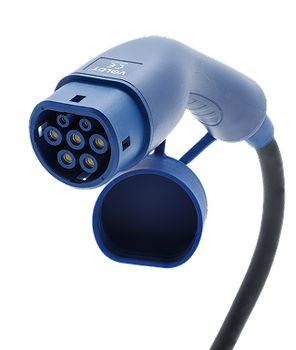
Mercedes eSprinter Charging cable

Mercedes eSprinter Charging cable


11kW
The Mercedes eSprinter has a charging capacity of 11kW. So we recommend using a charging cable of atleast 11kW for optimal charging speeds.

22kW cable compatible
However, please be aware that a 22kW cable is perfectly capable of charging at 11kW. With a 22kW cable you'll have guaranteed optimal charging speeds in the event of a new car or a possible upgrade in charging capacity.

Do you need to charge at a charging station or wall socket?

Mercedes eSprinter Specifications

11kW

16A

3 Phase

Type 2

113kWh (& 81kWh)

500km

53km/h

12.5 hours

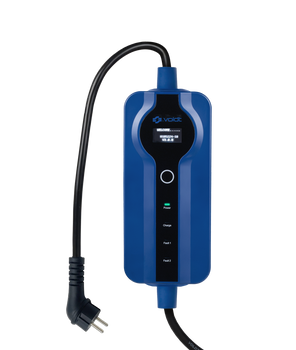
Mercedes eSprinter compatible portable charger

Our portable chargers also lets you charge the Mercedes eSprinter at a regular or a CEE wall socket.

What customers say about Voldt

Mercedes eSprinter Charging cable

  • Mercedes eSprinter Connector type:

  • Mercedes eSprinter Mobile versus fixed charging:

  • Mercedes eSprinter Charging speed:

  • Discover the range and charging capabilities of the Mercedes eSprinter

  • Connecting your Mercedes eSprinter to a charging station or outlet

For those considering buying a charging cable for the Mercedes eSprinter, or simply looking for more information on the best way to charge this electric car, it is essential to know the compatibility and specifications well. And with the above details, you are already well on your way. When looking for the perfect charging cable for your Mercedes eSprinter in our webshop, you can rely on these details to make the right choice.

Is the specific EV charging cable you are looking for still not among them? Then take a look at our full range of type 2 charging cables or all our mode 3 charging cables or check out our range of portable charging cables.

Couldn't find the right charger?

Thank you for submitting your form!

We appreciate your interest and will review your information as soon as possible.

Our team is dedicated to providing excellent customer service, and we will do our best to respond promptly.

Collection: Mercedes eSprinter Charging cable

The Mercedes-Benz eSprinter is a fully electric large panel van spanning two generations, both built on the familiar Sprinter platform and aimed at last-mile delivery, trades, and fleet operators. The first generation (W907, 2019–2022) was offered with 41 kWh or 55 kWh batteries and a front-wheel-drive layout. The second generation (W910, 2023–present) introduced a modular rear-wheel-drive architecture with battery options of 56 kWh, 81 kWh, and 113 kWh, a choice of 100 kW (136 hp) or 150 kW (204 hp) motors, and WLTP ranges from 259 km (161 miles) up to 438 km (272 miles) depending on configuration. Both generations share the same port location: a combined CCS2 inlet at the front of the van, behind the Mercedes star in the centre of the grille. The front-mounted port means the van typically needs to park nose-first towards the wallbox for the cable to reach without strain.

AC charging by generation

The first-generation eSprinter has a 7.4 kW single-phase onboard AC charger. At a compatible single-phase wallbox or a 32A CEE supply, this gives a full charge from empty in around six hours for the 41 kWh battery and around eight hours for the 55 kWh, making overnight depot charging the standard routine. DC rapid charging is available on first-generation vans at up to 80 kW via CCS2 as an option.

The second-generation eSprinter upgrades to an 11 kW three-phase onboard charger. At a three-phase wallbox, the 56 kWh battery fills in approximately five hours, the 81 kWh in around seven and a half hours, and the 113 kWh in approximately ten and a half hours. On a single-phase supply with a correctly rated cable (7.4 kW single-phase or 22 kW three-phase), the second-generation van draws 32A on one phase, delivering 7.4 kW: around eight hours 20 minutes for the 56 kWh, around 12 hours for the 81 kWh, and around 17 hours for the 113 kWh. DC rapid charging is available at up to 115 kW on second-generation models, with a 10–80% charge taking 30 to 42 minutes depending on battery size.

Cable choice

For first-generation vans with the 7.4 kW single-phase charger, a Voldt® 7.4 kW single-phase Type 2 cable is the correct match, delivering the van's full AC charging rate without restriction. An 11 kW three-phase cable is not suitable for Gen 1: its conductors are rated at 16A per phase, and on a single-phase supply it delivers only 3.7 kW, halving the charge rate and doubling depot downtime. A 22 kW cable (32A per phase) is the alternative future-proof option that also handles the full 7.4 kW on single-phase.

For second-generation vans with the 11 kW three-phase charger, an 11 kW cable is the correct match at any three-phase wallbox or public AC post. On a single-phase home or depot supply, the same bottleneck applies: an 11 kW cable restricts output to 3.7 kW, so a 7.4 kW or 22 kW cable is needed to reach 7.4 kW from a single-phase supply. A 22 kW cable covers both generations and provides forward compatibility for any future vehicle in the fleet with a higher-rated onboard charger.

Length: finding the right fit

Voldt® Type 2 cables are available in lengths from 4 m up to 40 m. Given the eSprinter's front charging port and the length of the van itself, cable reach deserves some thought. A 6 m cable suits installations where the van parks directly nose-in to the wallbox with minimal overhang. An 8 or 10 m cable is the more practical choice for most depot bays, where the van may not always be perfectly aligned with the charge point. For multi-van depots with fixed bay layouts or longer runs between charger and van, lengths from 10 m upward remove any concern about reach, and Voldt® supplies cables up to 40 m for installations where a long run is genuinely needed.

Portable charging with a CEE charger

The Voldt® portable CEE charging cable is a practical option at construction sites, event locations, remote depots, and for drivers taking a fleet vehicle home overnight. On second-generation vans, a 16A three-phase CEE socket (11 kW) gives the same charge times as a three-phase wallbox: approximately five hours for the 56 kWh, seven and a half hours for the 81 kWh, and ten and a half hours for the 113 kWh. A 32A three-phase CEE socket nominally delivers 22 kW, but the van's 11 kW onboard charger ceiling applies and the result is identical.

On first-generation vans, the single-phase charger draws from one phase only. On a 16A single-phase CEE socket (3.7 kW), the 41 kWh battery takes around 12 hours; the 55 kWh around 16 hours. On a 32A single-phase or 32A three-phase CEE socket, one phase carries 32A = 7.4 kW, giving a full charge in around six hours for the 41 kWh and around eight hours for the 55 kWh.

Red three-phase CEE sockets are found at industrial sites and commercial depots. Standard European campsite hookup points use blue single-phase 16A CEE sockets, capped at 3.7 kW. For drivers taking the van home, a standard domestic socket at 2.3 kW is suitable only as a slow emergency top-up: at that rate, even the smallest first-generation battery takes around 20 hours, making access to a proper wallbox or CEE supply strongly preferable for regular overnight charging.

One standard across the entire range

Voldt® charging cables are CE, UKCA and TÜV certified and manufactured according to IATF 16949 automotive quality standards. Single-piece moulded connectors, no glue or screws. IP67-rated for operation between −30°C and +50°C. 100% copper conductors with silver-plated contacts. Tested beyond 10,000 connection cycles. Three-year warranty, 100-day returns, free shipping across Europe.