


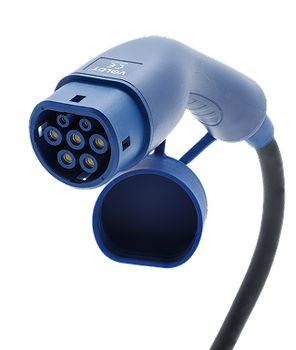
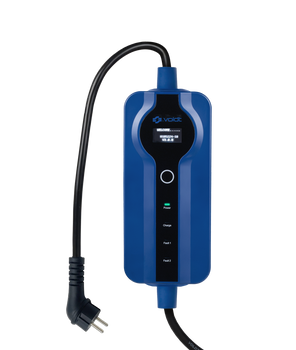

Electric vehicle infrastructure in the United Kingdom is moving toward a framework defined by complex, encrypted data exchange. This shift requires hardware that functions as a reliable conduit for high-density digital information. As the British market integrates mass-market electric mobility, the technical requirements for a charging cable now extend beyond electrical conduction. Every component must support the orchestration of digital communication protocols.
The ISO 15118 standard provides the foundation for this evolution through Plug & Charge technology. For engineers and fleet operators, the interplay between high-level communication protocols and physical hardware integrity is a necessary factor for operational reliability. Voldt® designs solutions that ensure the digital handshake remains as stable as the electrical connection it governs.
Key Points
-
The UK EV market is transitioning toward digitally managed charging infrastructure, where cables must support both high-current power delivery and encrypted high-level communication under ISO 15118.
-
ISO 15118 enables Plug & Charge through Power Line Communication over the Control Pilot conductor, requiring stable signal integrity, low noise, and precise hardware engineering to prevent data loss or failed sessions.
-
Voldt® manufactures locally in Europe, using single-mold IP67 connector construction, 100% high-purity copper cores, and silver-plated copper pins to enhance electrical performance, thermal stability, and moisture resistance.
-
Cable design directly affects digital communication reliability, as factors such as conductor purity, impedance control, finer stranding, and resistance influence signal-to-noise ratio and attenuation in high-frequency PLC systems.
-
Integrated safety systems, including thermal monitoring, grounding protection, and full CE, UKCA, and TÜV compliance, support long-term operational reliability and regulatory compliance in both residential and public UK charging environments.
The Voldt® Standard
Engineering Reliability Through Local Production
Voldt® operates as a European designer and manufacturer rather than a middleman or a bulk importer of generic hardware. We maintain control over the variables of the production process by building our charging solutions in local facilities. This model addresses a specific failure point in EV charging: the connector head.
Traditional plugs are often assembled from multiple plastic components held together by screws and adhesives. Over time, thermal cycling and mechanical stress can create gaps that allow moisture to ingress during storms or in high-heat environments. Even minor internal condensation alters the impedance of the data line and can inject noise into the ISO 15118 channel.
We address these risks by producing Voldt® connectors as a single, solid piece through a high-pressure molding process. This design eliminates internal cavities, achieves an IP67 rating, and ensures the plug is resistant to temporary immersion in accordance with standard test conditions.
Within the cable, we utilize 100% high-purity copper cores to reduce energy loss and help maintain signal integrity compared to less conductive alloys. This approach to craftsmanship is supported by a three-year full warranty and a one-hundred-day return policy. Every cable we manufacture is CE marked and UKCA marked with full conformity documentation, alongside independent testing by TÜV.
These specifications are provided for drivers and fleet operators who prioritize a technical investment in long-term reliability.
The Digital Architecture of Modern Mobility
ISO 15118 Defined
The ISO 15118 standard represents a transition from the analog signaling used in previous years. Traditional charging managed safety through Pulse Width Modulation signals transmitted over the Control Pilot pin. While effective for basic safety checks, analog signaling is limited in its ability to transmit the high-density data required for automated billing or bidirectional energy transfer.
ISO 15118 introduces High-Level Communication by superimposing a digital signal onto the existing Control Pilot conductor using Power Line Communication. This implementation relies on the HomePlug Green PHY standard to modulate data across a defined frequency range. By utilizing the copper core as a data link, the vehicle and the charging station establish an Internet Protocol connection to exchange encrypted messages.
The Multi-Part Structure of the Standard
The complexity of ISO 15118 is managed through discrete parts that address specific layers of the communication stack.
|
Standard Part |
Designation |
Technical Function and Application |
|
ISO 15118-1 |
General Requirements |
Outlines the overarching architecture and functional requirements. |
|
ISO 15118-2 |
Network and Application |
Defines requirements for network and application protocols (OSI layers 3 to 7). |
|
ISO 15118-3 |
Physical and Data Link |
Specifies physical and data link layer requirements for high-level communication. |
|
ISO 15118-4 |
Protocol Testing |
Provides the test suites for validating Part 2 implementation. |
|
ISO 15118-5 |
Physical Testing |
Details testing procedures for the physical and data link layers. |
|
ISO 15118-20 |
Second Generation |
Introduces support for bidirectional power transfer (BPT) and TLS 1.3. |
Plug & Charge
The Mechanics of Authentication
Plug & Charge offers a professional solution that simplifies the user experience by automating identification. When a Voldt® Type 2 charging cable connects a compatible vehicle to a station, a sequence of digital events occurs.
The system initiates a session setup followed by a service discovery request. The vehicle then presents its digital credentials, such as a contract certificate, which the charger validates against a Public Key Infrastructure.
This high-speed dialogue is conducted using Efficient XML Interchange, a compressed binary format designed to minimize latency. The success of this exchange is significantly influenced by the signal-to-noise ratio maintained by the hardware. If the internal geometry or material purity of the cable is compromised, high-frequency signals face increased attenuation. This contributes to communication timeouts and can lead to failed charging sessions.
The Physics of Information
Why Cable Quality Matters
Voldt® treats the EV charging cable as a high-frequency transmission line rather than a simple power carrier. The transition to ISO 15118 makes the electrical properties of the Control Pilot and Protective Earth lines important for data integrity.
Signal-to-Noise Ratio and Attenuation
Power Line Communication operates by modulating a signal onto a conductor that may already carry electrical noise from the vehicle's onboard charger or the surrounding environment. For a stable digital handshake, the signal level must remain above the noise floor.
Voldt® utilizes a 100% high-purity copper core to ensure that resistivity remains as low as possible. Many mass-produced cables use copper-clad aluminum or inferior alloys. These materials increase resistance and can lead to a weaker signal over longer distances.
Impedance Optimization and Finer Stranding
Because data operates in the megahertz frequency range, the conductor is subject to the skin effect. This phenomenon causes high-frequency current to flow near the surface of a conductor rather than through its core.
Voldt® engineers its cables with a high count of finer copper strands to optimize electrical properties and impedance. While this does not eliminate the skin effect, the design increases the total surface area of the conductor, facilitating a cleaner path for data and improving resistance to electrical noise.
Connector Engineering
Silver-Plating and Thermal Management
The physical interface between the plug and the vehicle is where significant electrical stress occurs. Voldt® connectors use 100% silver-plated copper pins.
Silver possesses the highest electrical and thermal conductivity of any metal. This helps manage heat by reducing resistance at the contact point, particularly during high-current charging sessions such as three-phase charging at higher power levels.
While silver can tarnish in sulfur-rich environments, its use supports lower contact resistance and better heat dissipation compared to many nickel-plated alternatives.
Safety Protocols and UK Regulatory Compliance
A charging cable must endure prolonged operation across varied environmental conditions. Voldt® incorporates redundant safety features to protect both the vehicle and the user.
Thermal and Grounding Protection
In Voldt® Mode 2 mobile charging cables, integrated thermistors are positioned near the plug contacts. These sensors communicate with the In-Cable Control and Protection Device to monitor heat buildup. If temperatures exceed safe thresholds, the system automatically reduces or stops the current.
This is a particularly relevant safety feature for the UK market, where charging frequently occurs from household sockets not designed for sustained high electrical loads. Passive Mode 3 Type 2 cables rely on the charging station and vehicle for active thermal management, while Voldt® ensures the physical integrity of these connections meets the same standards.
Voldt® products also feature integrated grounding protection. The system continuously monitors the earth connection, and charging will not start if grounding is missing or faulty. This protects sensitive vehicle electronics and prevents electric shock.
The Public Charge Point Regulations
The UK market is governed by regulations that make reliable hardware essential for commercial operators. The Public Charge Point Regulations mandate high availability for rapid public charging networks. Meeting these requirements depends on minimizing intermittent hardware faults.
Voldt®'s engineering approach is designed to support compliance by reducing cable-related failure variables and ensuring stable operation in demanding public charging environments.
Professional Peer Analysis
The Voldt® Engineering Advantage
From a senior engineering perspective, the choice of a charging cable is a matter of risk management. The industry remains in a transitional phase where many products are built with consumer electronics principles rather than infrastructure-grade expectations.
Voldt®'s decision to manufacture in Europe enables a level of quality control that is difficult to achieve with outsourced imports. By combining high-purity copper conductors, silver-plated contacts, and single-mold IP67 connector protection, Voldt® ensures that the digital handshake defined by ISO 15118 remains stable and dependable.
Voldt® delivers hardware built for the long term, engineered to demanding European standards.