


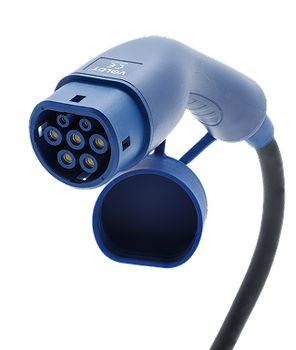
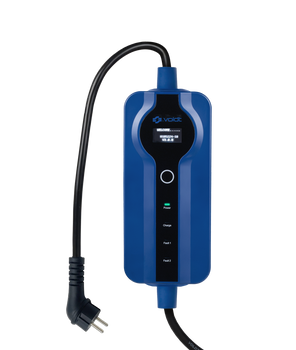

When you buy an EV charging cable, most products appear almost identical. The same Type 2 cable and connectors. The same 16 A or 32 A rating. The same promise of safe, reliable charging.
What you do not see is what happens under sustained load.
Key Takeaways
-
Certified design is just the starting point.
CE, UKCA and TÜV certification confirm a cable’s design meets regulatory safety and performance standards, but certification alone doesn’t guarantee every unit performs perfectly in real use. -
Individual testing verifies real-world performance.
Each charging cable is tested before shipping to ensure it performs safely and reliably under actual electrical load conditions - not just on paper. -
Critical checks include:
-
High-current load testing to ensure stable current flow and controlled temperature behavior.
-
Insulation resistance testing to ensure safe separation between live parts.
-
Thermal imaging to detect hotspots under load.
-
Plug/pin alignment verification for correct mechanical tolerances and a consistent fit.
-
-
Subtle variations matter.
Small internal differences - such as conductor purity, contact finishing, or crimp quality - can affect heat build-up, durability and long-term performance even if the cable looks fine externally. -
Consistent performance over time is the goal.
Individual testing reduces variability between units, lowers the likelihood of unexpected behavior under load, and supports stable, long-term charging performance. -
Testing adds confidence beyond certification.
While certification validates design and production intent, individual verification ensures each cable delivered actually works safely in everyday use - from repeated charging sessions to varied environmental conditions.
An EV charging cable is a continuous power component. It carries high current for extended periods, often outdoors, often in cold, rain or heat. Small differences in materials, contact quality or internal assembly can translate into meaningful differences in temperature, stability and long term durability.
This is why certification alone is not the whole story. At Voldt®, every charging cable is individually tested before it leaves our European production facility. Not because it looks good in a brochure, but because daily reliability demands it.
Certification is essential, but it is only the starting point
CE, UKCA and TÜV certification confirm that a product design complies with relevant European safety and performance standards. That matters. It proves that the cable has been engineered according to strict electrical and mechanical requirements.
However, certification validates the design and the production process. It does not automatically guarantee that every single unit performs identically once it is connected to a vehicle and a charging station.
Charging at 16 A or 32 A, whether single phase or 3-phase, creates constant electrical and thermal stress. Resistance inside conductors and contacts generates heat. Even a small increase in resistance at a connection point can result in a noticeable temperature rise during a long charging session.
In practice, this means that conductor quality, internal crimping, contact surfaces and mechanical tolerances all influence real world performance. A cable can look flawless from the outside and still contain a weakness that only becomes visible under load.
Individual testing exists to detect exactly that.
What individual testing actually verifies
Before shipping, each Voldt® charging cable is checked beyond visual inspection. The focus is simple: confirm that the cable you receive performs as intended, not just in theory, but in measurable electrical terms.
The core verification includes:
-
High current load testing to confirm stable current flow and controlled temperature behavior
-
Insulation resistance testing to ensure proper separation between live conductors and accessible parts
-
Thermal imaging to detect localized hot spots under load
-
Plug and pin alignment verification to confirm correct mechanical tolerances and consistent fit
Each of these steps addresses a specific risk area.
High current testing confirms that internal connections remain secure and that no abnormal heat build-up occurs at contact points. Insulation resistance testing verifies that safety barriers remain intact and robust. Thermal imaging makes it possible to identify small irregularities that standard measurements might miss. Mechanical alignment checks ensure even contact pressure and long term connector integrity.
The result is consistency. Not just compliance.
Why load performance reveals real differences
Many charging cables on the market share similar specifications on paper. The difference becomes visible during extended use at higher currents.
Conductor purity and true cross-section influence resistance and heat generation. The way contacts are finished and assembled influences long term stability. Internal strain relief affects how well the cable handles repeated bending and daily handling.
Without strict quality control and individual verification, small variations can pass unnoticed. Under light use, they may not create immediate problems. Under sustained 32 A charging, they can contribute to higher operating temperatures and gradual wear.
The outcome is rarely dramatic. It is usually progressive. Slightly warmer connectors. Minor charging interruptions. Increased wear at the plug interface. Reduced service life.
Reliable charging is not about a single successful session. It is about consistent performance over years.
European manufacturing with controlled verification
At Voldt®, we design and manufacture our EV charging cables in Europe. This gives us direct control over materials, assembly processes and quality control. It also allows us to apply structured verification to every unit before dispatch.
Our charging cables are:
- CE, UKCA and TÜV certified
- IP rated for outdoor conditions
- Designed for mechanical durability in daily use
- Backed by a 3 year warranty
- Supported by a clear return policy
Individual testing is not an isolated feature. It is part of a broader philosophy. Charging should be straightforward, certified and dependable. The product should perform the same way in winter as it does in summer. It should maintain electrical stability whether used occasionally or every day.
What this means for everyday drivers and professionals
For private EV drivers, charging is routine. You plug in at home or at a public charging station and expect the process to be uneventful. For installers and fleet managers, consistency and compliance are non negotiable.
In both cases, individual testing reduces variability. It lowers the likelihood of unexpected behaviour under load. It protects connectors, charging stations and vehicles from unnecessary stress.
When choosing a charging cable, it helps to look beyond connector type and length. Consider whether the brand controls its own production. Consider whether certification is clearly documented. Consider whether each cable is verified before shipping.
These factors do not change how the cable looks. They change how it performs over time.
Conclusion
A certified EV charging cable is essential. An individually tested cable offers an additional layer of confidence.
High current charging leaves little margin for inconsistency. Reliable performance depends on conductor quality, precise assembly and systematic verification before delivery.
At Voldt®, we combine European manufacturing, recognised certification and individual testing to deliver charging cables built for everyday use and long term reliability. Charging should be simple, stable and safe.
That is what proper certification and individual testing are designed to ensure. Need more information read our article about 'Which cable should I choose'.