



Key points:
-
32A EV charging cables support higher current, making them compatible with more powerful AC charging stations.
-
A 32A cable can also operate safely at lower charging currents, offering flexibility across different vehicles and charging setups.
-
Thicker conductors and stronger insulation help manage heat more effectively during longer charging sessions.
-
Higher-rated cables are typically built with more durable materials to withstand frequent outdoor use.
-
Choosing a 32A charging cable helps future-proof your charging setup as EV technology and infrastructure continue to evolve.
Why Smart EV Drivers Future-Proof with 32A Charging Cables
Choosing the right EV charging cable is an important part of building a reliable charging setup. While many electric vehicles come with basic charging equipment, drivers often purchase their own cables for public charging stations or home wallboxes. One specification that frequently appears when comparing cables is the current rating: 16A or 32A.
A 32A charging cable is designed to handle higher electrical current than a 16A cable. This capability can influence charging speed, compatibility with charging infrastructure, and long-term usability. For many EV drivers, selecting a higher-rated cable is not just about immediate performance, but about ensuring their charging equipment remains suitable as vehicles and charging networks continue to develop.
What a 32A Charging Cable Actually Means
The “32A” rating refers to the maximum electrical current that the cable can safely carry. Current, measured in amperes (amps), determines how much electrical power can be delivered during AC charging when combined with the voltage of the charging system.
In Europe, AC charging commonly operates at either single-phase 230V or three-phase 400V. A cable rated for 32 amps can support higher charging power when the vehicle and charging station are capable of delivering it. If either the car or the charging station provides less current, the system automatically limits the charging rate.
This means a 32A cable does not force faster charging. Instead, it ensures the connection between the vehicle and charging station can safely handle higher power levels if they are available.
32A vs 16A EV Charging Cables: What’s the Difference?
The primary difference between 16A and 32A charging cables lies in their current capacity and construction. Both cables perform the same function, but they are engineered for different electrical loads.
A 16A cable is designed for lower AC charging currents and works well in setups where the charging station or vehicle provides moderate charging power. However, if a charging station is capable of delivering higher current, the 16A cable will limit the maximum charging capacity.
A 32A cable supports higher charging currents and therefore allows more charging power when the vehicle and charging station can provide it. Because of the higher electrical load, 32A cables typically use thicker copper conductors and stronger insulation materials.
For EV drivers, this difference translates into flexibility. A 32A cable can still be used with lower-power charging stations, while also supporting higher-power infrastructure when available.
Why Many EV Drivers Choose 32A for Future-Proofing
Electric vehicle technology continues to evolve, and charging infrastructure is steadily becoming more capable. Many newer public charging stations are designed to deliver higher AC charging capacities, and modern EV models increasingly support these higher power levels.
Choosing a 32A charging cable allows drivers to take advantage of these developments. Even if a driver’s current vehicle charges at a lower AC rate, a higher-rated cable ensures compatibility with future vehicles or more powerful charging stations.
Future-proofing in this context simply means avoiding unnecessary limitations in the charging setup. With a 32A cable, the charging performance is determined by the vehicle and the station rather than the cable itself.
Thicker Conductors and Better Heat Management
Electrical current flowing through a cable produces heat due to electrical resistance. Proper conductor sizing and insulation design are therefore essential for managing temperature during charging sessions.
Because 32A cables are designed for higher current levels, they usually contain thicker copper conductors. Thicker conductors reduce electrical resistance and allow electricity to flow more efficiently. This helps minimise heat buildup during longer charging sessions.
In addition, the insulation and outer cable jacket must be engineered to maintain electrical safety and structural integrity under varying environmental conditions. High-quality materials help ensure that the cable remains reliable during repeated use.
Durability for Everyday Charging Conditions
EV charging cables are frequently exposed to real-world conditions such as outdoor environments, repeated handling, and regular coiling and uncoiling. Over time, these factors can place mechanical stress on both the cable and its connectors.
Cables designed to support higher electrical loads are often constructed with durable materials and reinforced strain relief at connection points. This helps protect the cable from wear and mechanical fatigue during everyday use.
Environmental factors such as temperature fluctuations can also affect cable flexibility and long-term durability. Charging cables engineered with robust materials are designed to remain flexible and reliable across a wide range of conditions.
Compatibility with Public Charging Infrastructure
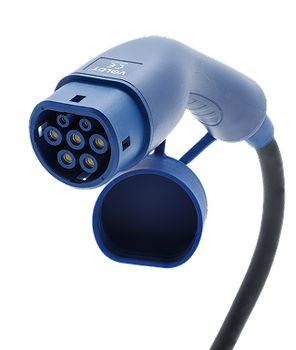
Across Europe, most public AC charging stations use the Type 2 connector standard. In many locations, drivers must use their own cable to connect the charging station to their vehicle.
A reliable Type 2 charging cable allows EV drivers to connect to a wide range of public charging points. When the cable supports higher current levels, it ensures compatibility with stations that provide greater AC charging capacity.
This flexibility is particularly valuable for drivers who regularly charge in different locations or rely on public charging infrastructure.
When a 32A Charging Cable Makes the Most Sense
A 32A charging cable can be a practical choice for EV drivers who want a flexible and future-ready charging setup. Drivers who frequently use public AC charging stations, install higher-power home wallboxes, or plan to upgrade their vehicle in the future may benefit from the additional current capacity.
Because the cable can operate at both lower and higher charging currents depending on the charging environment, it offers broad compatibility across different charging scenarios.
As EV technology and charging infrastructure continue to develop, choosing equipment designed for higher charging capacities can help ensure a charging setup remains reliable and adaptable for years to come.