



Choosing the right charging cable for an electric car
Choosing the right charging cable for an electric car is not always straightforward. Many drivers ask themselves which charging cable they need for their electric car, especially when faced with terms such as Mode 2, Mode 3, Type 2, CCS2 or CHAdeMO. There are several types of electric car charging cables, each designed for a specific charging situation, whether at home, at work or at public charging stations.
Key Takeaways
-
Charging cables are differentiated by charging mode and current type - mainly alternating current (AC) for everyday charging and direct current (DC) for fast charging. The cable carries electricity while the connector determines how it plugs into the car and charger.
-
AC vs DC charging:
-
AC charging is most common for home and regular public charging; the car converts the electricity internally.
-
DC charging (fast charging) bypasses the car’s onboard charger and feeds high-power electricity directly into the battery station-side.
-
-
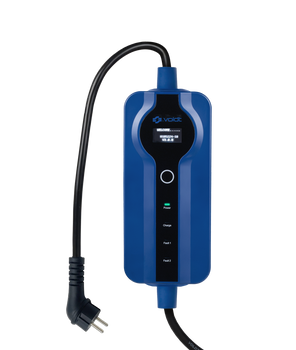
Mode 2 charging cables are designed for occasional use with a standard household socket and include a control/enabled safety unit. They’re suitable for temporary or emergency charging but not ideal for daily use due to limited power and slower speed.
-
Mode 3 charging cables are the standard choice for everyday charging at wallboxes and public AC chargers. They enable full communication between the vehicle and charging point, providing safer and more efficient charging.
-
Choosing the right cable depends on where you charge:
-
At home, most people use Mode 3 AC cables.
-
At work or public AC chargers, cables compatible with Type 2 connectors are common (in Europe).
-
For long journeys, DC fast chargers (e.g., CCS2) are used, but these are usually permanently attached to the charger and not something you buy separately.
-
-
Understanding cable and connector differences prevents confusion and unnecessary purchases. The goal of the guide is to help drivers pick only what they truly need, based on their typical charging context.
In this guide, we explain clearly how different charging cables and connectors work, the difference between alternating current and direct current, and which solution makes sense depending on where you usually charge. The goal is to help you understand which EV charging cable you actually need, without confusion or unnecessary purchases.
Main types of charging cables for electric cars
Before looking at each solution in detail, it is important to distinguish between two concepts that are often confused: the charging cable and the connector. The cable is the component that carries electricity, while the connector determines how the vehicle connects to the charging infrastructure.
In practice, different types of electric car charging cables are defined mainly by the type of current they use and the charging mode they are designed for.
AC charging vs DC charging
Alternating current charging is the most common option in domestic environments and at many public charging points. In this case, the vehicle converts the electricity internally before storing it in the battery.
Direct current charging is used for fast charging. Here, the conversion takes place inside the charging station itself, allowing energy to flow directly into the battery without passing through the car’s onboard charger.
This distinction explains why different cables, connectors and charging modes exist.
What is a Mode 2 charging cable?
Mode 2 charging is intended for occasional charging from a standard household socket. A Mode 2 cable includes an in-line control and protection unit that makes charging from a conventional socket safer than using a regular extension cable.
This solution is recommended for temporary or emergency situations. While it allows the vehicle to be charged, it has clear limitations in terms of charging speed and is not designed for daily, intensive use.
What is a Mode 3 charging cable?
Mode 3 is the standard solution for charging via a wallbox and for most public AC charging stations. It enables full communication between the vehicle and the charging point, ensuring safer, more controlled and more efficient charging.
This mode requires a dedicated cable designed to withstand frequent use and more demanding conditions. It is the most common choice for everyday charging, both at home and in public environments.
You can view suitable options in the range of Mode 3 charging cables.
Charging connectors: Type 1, Type 2, CCS2 and CHAdeMO
In addition to the charging mode, the connector determines compatibility between the vehicle and the available charging infrastructure.
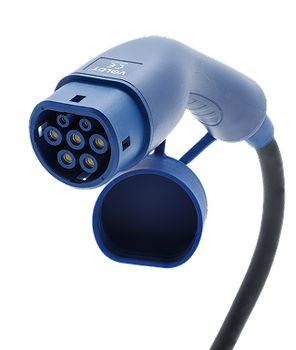
Type 2 connector
The Type 2 connector is the standard for AC charging in Europe and the United Kingdom. It is used by the vast majority of electric vehicles sold on the European market and is compatible with home wallboxes as well as public AC charging stations.
If your car uses this standard, you will need a compatible cable from the Type 2 charging cables collection.
Type 1 connector
Type 1 connectors are mainly found on older electric vehicles and some imported models. They are less common in Europe but still appear on certain cars, especially those originally produced for non-European markets.
For these vehicles, a suitable solution can be found in the Type 1 charging cables range.
CCS2 connector
CCS2 is designed for fast charging using direct current. It combines a Type 2 connector for AC charging with additional DC contacts, allowing the same vehicle inlet to support both AC and DC charging.
This system is now the most widely used standard for modern fast-charging infrastructure in Europe and the UK.
CHAdeMO connector
The CHAdeMO connector is mainly found on older electric vehicles and certain models of Asian origin. In Europe, its use is steadily declining as many charging stations move towards CCS2.
In these cases, an adapter is often required to access available infrastructure. An example is the CCS2 to CHAdeMO EV charging adapter, which allows CHAdeMO-equipped vehicles to charge at CCS2 fast-charging stations.
Which charging cable do you need, depending on where you charge?
Choosing the right charging cable depends largely on where and how often you charge your electric car.
At home, AC charging using a Mode 3 cable is usually the most practical and safest option.
At work, many car parks provide AC charging points that are compatible with Type 2 cables, making regular charging straightforward.
At public charging stations, the required cable depends on whether the station offers AC or DC charging. For fast charging on longer journeys, DC stations with CCS2, and in some cases CHAdeMO, are typically used.
Understanding this context is key to answering the question of which charging cable you need for your electric car. Need more help? Read our article about 'which charging cable should I choose'.