



KEY INSIGHTS
If you have ever wondered how EV charging stations communicate with the outside world, and why some cables just work everywhere, the answer lies in four letters: OCPP.
The Invisible Language of EV Charging
Every time you plug in an electric vehicle at a public station, a lot is happening behind the scenes. The charger authenticates your session, monitors power flow, logs usage data, and communicates with a remote management system, all in real time. What makes all of this possible? A protocol called OCPP: the Open Charge Point Protocol.
Think of OCPP as the universal language spoken between EV charging hardware and the software platforms that manage it. Without a standard like this, every charger manufacturer would build its own closed ecosystem, and interoperability across networks would be near impossible. The protocol sits invisibly between the plug and the platform, making seamless charging experiences a reality at scale.
A Brief History: Where Did OCPP Come From?
OCPP was first developed in 2009 by the E-Laad Foundation in the Netherlands, with a clear goal: allow any charging station to talk to any back-end management system. The protocol quickly gained traction across Europe and has since become the global de facto standard for charge point communication, adopted by thousands of operators and hardware manufacturers worldwide.
The most widely deployed version today is OCPP 1.6, which introduced WebSocket-based communication and a richer feature set. The newer OCPP 2.0.1 builds on this with advanced security, smart charging capabilities, and improved device management, making it ready for the next decade of EV infrastructure.
How Does OCPP Actually Work?
At its core, OCPP operates on a client-server model. The charging station (the client) connects to a central management system (the server) over a WebSocket connection. From there, both sides exchange messages covering everything from starting and stopping a session to pushing remote firmware updates.
Key capabilities enabled by OCPP include:
Remote start and stop: a network operator or driver app can initiate a session without physical interaction.
Real-time monitoring: power consumption, status, and error codes stream continuously to the backend.
Smart charging: the system dynamically adjusts power draw based on grid demand or energy prices.
Over-the-air updates: keeping stations current without a technician visit.
Why OCPP Matters for EV Drivers
For most drivers, OCPP is entirely invisible, which is exactly how it should be. But its impact is felt every time a session starts smoothly, every time a charging app shows an accurate status, and every time a roaming agreement lets you charge on a foreign network without friction.
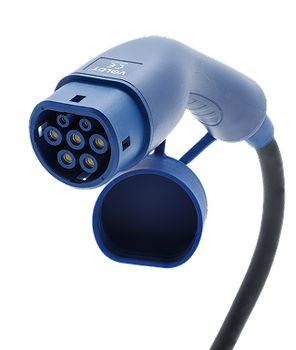
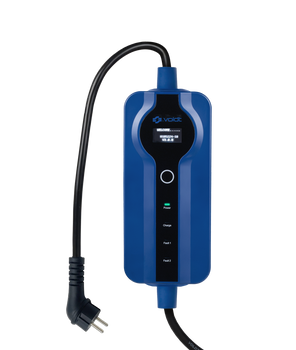
The protocol is the foundation of interoperability. Because OCPP is open and standardised, a charging cable or station does not need to be locked to a single provider. It is the reason a Voldt® EV charging cable works seamlessly across thousands of charging points worldwide, from urban fast-chargers to workplace installations to home wallboxes. Open standards protect the consumer, and OCPP is the clearest example of this in the EV space.
Smart Charging and the Grid: The Next Frontier
As electric vehicles become the norm rather than the exception, the relationship between EVs and the power grid grows critically important. Millions of cars charging simultaneously, without coordination, would strain infrastructure significantly. This is where OCPP's smart charging features become essential.
Through OCPP, a central system can issue charging profiles that control exactly how much power a station draws and when. Combined with vehicle-side protocols like ISO 15118, this enables Vehicle-to-Grid (V2G) scenarios where EVs actually feed energy back to the grid during peak demand, turning parked cars into distributed energy assets. This is already being piloted across Europe and will become standard infrastructure within this decade.
What to Look for in an OCPP-Compatible Cable
Not all Type 1 or Type 2 charging cables are built equal. OCPP compatibility means your hardware stays relevant as network infrastructure evolves, but beyond the protocol, look for robust build quality. Cables endure thousands of plug cycles, weather exposure, and significant sustained current loads. Durability is not optional.
Safety certifications (CE, TUV, or equivalent), conductor gauge, and connector precision all determine how reliably a cable performs over its full lifetime. An OCPP-ready cable that fails mechanically after two winters is no bargain, and in a world where your car is your daily lifeline, reliability is not a feature, it is a baseline.

EV charging does not have to be this complicated.
Now that you understand the protocol, all you need is hardware that delivers on its promise. Rigorously built, fully certified, and ready for wherever the road takes you: Voldt® offers you exactly that.