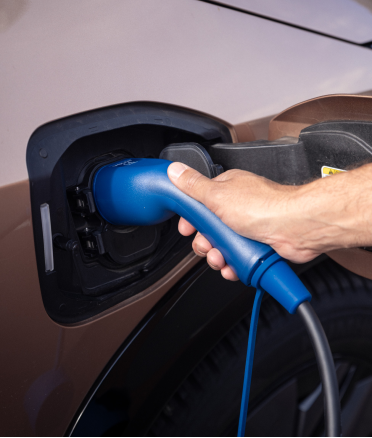
Are Voldt's charging cables suitable for every charging station in the United Kingdom?
Yes, Voldt® EV charging cables are compatible with all standard public and home charging stations in the United Kingdom that support Type 2 connectors. Type 2 (IEC 62196-2) is the official standard for EV charging infrastructure in the UK and across most of Europe, and all Voldt® charging cables are designed to meet this specification. This ensures seamless connectivity whether you’re charging at a public station, a wallbox at home, or a destination charger.
Voldt® offers a wide range of Type 2 charging cables with different amperage and phase options, such as 1-phase 16A, 1-phase 32A, 3-phase 16A, and 3-phase 32A. These variants ensure optimal charging performance depending on your vehicle's onboard charger and the capacity of the charging station. All cables are CE and TÜV certified and manufactured in Europe, ensuring high quality, safety, and full compliance with UK and EU regulations. The cables also feature industry-leading weather resistance, making them reliable for outdoor use in the UK's variable climate.
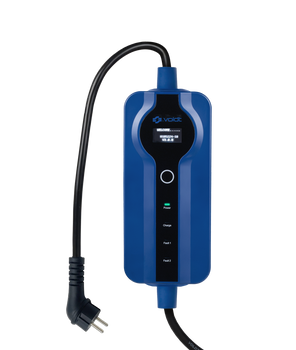
In addition to standard Type 2 to Type 2 cables, Voldt® also provides mobile charging solutions such as Type 2 to UK 3-pin plug (BS 1363) adapters. These are particularly useful for charging from regular household sockets in the UK. This flexibility ensures that even in locations without a dedicated EV charger, your vehicle can still be charged safely and efficiently. If you're unsure which cable best suits your vehicle or location, Voldt® provides a helpful cable selection tool and expert customer support.
02.
In what order do you charge your electric car?
To charge your electric car safely and correctly, follow these steps in the right order: first, make sure your car is parked and switched off.
Then, connect the charging cable to the charging station or wall socket first, and only after that connect it to the vehicle. If you're using a Mode 2 cable (with an in-cable control box for household sockets), make sure the control box is positioned properly before plugging it into the car. The car and charging system will usually communicate automatically, and charging should begin without any extra steps.
To finish charging, always disconnect the cable from the car first, and then unplug it from the charging station or wall socket. This prevents electrical arcing and ensures a safer disconnection. Always monitor the charging status during the session via your car’s display or the charging point’s indicator lights.
03.
Can I use a three-phase EV charging cable in a single-phase charging box?
Yes, you can use a three-phase EV charging cable in a single-phase charging box, but the charging speed will be limited to the capabilities of the single-phase system. The cable will simply use one of the three phases for power transmission, while the other two remain inactive. This setup is electrically safe and commonly supported by both EVs and charging stations, provided that the connectors and standards (typically Type 2 in Europe) are compatible.
From a technical perspective, a three-phase charging cable—such as a Voldt® 22 kW Type 2 kabel—is built to handle up to 32A per phase across three phases, giving a maximum of 22 kW charging capacity. When connected to a single-phase outlet or wallbox, however, the power is limited to just one phase. This means you’ll get a maximum of 7.4 kW (32A x 230V) if the installation supports it. The cable’s internal wiring and pins will safely carry the single-phase load, as they are designed to support higher loads across more conductors.
It's also important to consider that while the cable itself is compatible, your EV and the onboard charger must also support charging over a single phase. Most European EVs do, but some older or imported models might have limitations. Additionally, the wallbox must be designed to signal correctly over a Type 2 interface and must comply with standard communication protocols (IEC 61851). If all devices in the chain are compliant and properly installed, you can use a three-phase cable in a single-phase environment without any issues.
04.
What is the difference between the male and female sides of an EV charging cable plug?
The difference between the male and female sides of an EV charging cable plug lies primarily in their intended connection points and technical design. The male side of the cable, often referred to as the charging station plug, is the end that connects to the EV charging point or wallbox. This side typically has exposed pins that deliver power and communication signals. The female side, commonly called the vehicle connector, is designed to plug into the electric vehicle's charging port and features recessed contacts to enhance safety.
Both sides conform to international standards like IEC 62196-2 (commonly known as Type 2 in Europe), but their configuration and purpose are not interchangeable. The female vehicle connector includes several safety mechanisms such as proximity detection and locking pins, which ensure a secure and tamper-proof connection with the car. In contrast, the male plug lacks these vehicle-specific features but is optimized to fit the infrastructure side of the charging interface.
This male/female distinction is also critical for regulatory and safety reasons. It prevents users from connecting two cables together to create an unauthorized extension, which could lead to overheating, communication errors, or electrical hazards. By ensuring the cable only connects from the station to the car in one direction, the EV charging system maintains proper current flow, grounding, and handshake protocols, which are essential for safe and efficient charging.
05.
How much electricity does charging an electric car consume?
Charging an electric car typically consumes as much electricity as the size of its battery in kilowatt-hours (kWh), with some additional overhead due to energy loss during charging. For example, fully charging an electric vehicle (EV) with a 60 kWh battery generally requires about 60 kWh of electricity. At an average electricity tariff of €0.22 per kWh, this results in a charging cost of approximately €13.20. However, actual electricity consumption may vary depending on a number of technical and environmental factors.
Here are the key factors that influence electricity usage when charging an EV:
Battery capacity: Most EVs have batteries ranging from 35 kWh (e.g. Renault Zoe) to over 100 kWh (e.g. Tesla Model S Long Range). The larger the battery, the more electricity is needed to charge it fully.
Charging efficiency: Energy losses of 5–15% can occur during AC or DC charging due to heat and conversion losses, meaning that you may need to draw more energy from the grid than the battery’s rated capacity.
State of charge and usage pattern: If you usually charge from 20% to 80%, you will consume less energy per session than a full cycle from 0% to 100%. Preconditioning and battery temperature management can also affect consumption.
For a more accurate estimation, consider the following:
Multiply your battery capacity (in kWh) by 1.05–1.15 to account for charging losses.
Check your local electricity rate (per kWh) to calculate charging costs.
Use smart charging solutions or mobile chargers like those from Voldt® to improve efficiency and track consumption precisely. These offer compatibility with household sockets or industrial power outlets and come with integrated safety features to reduce energy waste.
By understanding your vehicle's battery size and charging habits, you can make informed decisions about electricity usage, costs, and optimal charging methods.
06.
How can I receive information about the shipment of my parcel?
Once you have placed your order and made your payment, you will automatically receive an email with information about the tracking number of your parcel.
EV charging cables for reliable everyday use
An ev charging cable is one of the most critical components in the electric vehicle charging process. While charging points and vehicles often receive the most attention, the cable itself determines how safely, consistently and efficiently power is delivered. This collection brings together Voldt® solutions designed for real-world charging across England, whether at home, at work or at public charging locations.
Voldt® designs and manufactures its charging products in Europe, with a focus on durability, certification and long-term usability. These are not generic accessories, but carefully specified components intended to work reliably across years of daily use. An ev charging cable should not be something you have to think about once installed or packed in the boot. It should simply work, every time.
What an EV charging cable actually does
An ev charging cable connects your vehicle to a charging point and manages both power transfer and communication between the two. This ensures that current is delivered safely, within the limits of the vehicle and the charging infrastructure. A poorly specified cable can restrict charging speed, generate unnecessary heat or suffer premature wear.
In practice, modern ev charging cables are designed to handle repeated connection cycles, outdoor exposure and varying electrical loads. This is particularly important in England, where charging often takes place outdoors and in shared environments. Voldt® cables are engineered with these conditions in mind, rather than tested only to minimum standards.
Understanding EV cable choices
Many drivers searching for an ev cable are unsure how much difference one cable makes compared to another. In reality, differences in conductor size, insulation materials and connector construction have a direct impact on performance and lifespan.
The term ev charging cable types covers variations in power rating, current capacity and intended use. Some cables are designed for lighter domestic charging, while others support higher currents and longer charging sessions. Choosing the right type avoids unnecessary limitations and ensures compatibility with both current and future charging setups.
Home charging and standard residential charge points
Lightweight, flexible and suitable for most daily charging situations
Type 2 charging cable (three phase)
Up to 22 kW
Workplace chargers and faster public charging stations
Higher power capacity and faster charging where infrastructure allows
Coiled EV charging cable
Up to 22 kW
Drivers who want compact storage in the vehicle
Cable stays off the ground and takes up less space in the boot
Heavy-duty EV charging cable
Up to 22 kW
Frequent public charging or intensive use
Extra durability and resistance to wear, weather and repeated use
Choosing the right cable for your vehicle
An ev car charging cable should always be selected based on the vehicle’s onboard charger and the charging points you use most often. While higher-rated cables do not force faster charging, they ensure that the cable itself never becomes the limiting factor.
Many drivers also search for the best ev charging cable, but “best” in this context means suitable, certified and built for longevity. A cable that matches your vehicle, charging habits and environment will always outperform a generic option with vague specifications.
Voldt® cables are clearly specified, allowing drivers to choose confidently without relying on assumptions or marketing claims.
Everyday charging scenarios in England
Across England, EV charging takes place in a wide range of environments. Home driveways, residential car parks, workplace chargers and public on-street points all place different demands on a cable. Temperature variation, moisture and frequent handling all accelerate wear if materials are poorly chosen.
This is why Voldt® focuses on mechanical robustness and stable electrical performance. An ev charging cable should remain flexible in colder conditions, resist abrasion and maintain secure connector engagement over time. These factors are just as important as headline power ratings.
Buying from a specialist EV charging cable store
An ev charging cable store should do more than simply list products. It should help users avoid incorrect purchases by providing clear information and properly differentiated options. Many returns and compatibility issues stem from unclear specifications or overly generic product descriptions.
Voldt® approaches this differently. Each charging cable is presented with transparent technical detail, reflecting how it is intended to be used. This reduces confusion, prevents mismatched purchases and supports long-term customer satisfaction.
Whether you are replacing an existing cable or buying one for a new vehicle, clarity matters more than variety.
Charging cable quality and long-term value
A charging cable ev is a long-term component, not a disposable accessory. While cheaper alternatives may function initially, they often degrade faster under daily use. Connector wear, insulation fatigue and internal conductor heating are common failure points in low-quality cables.
Voldt® products are designed to minimise these risks through controlled European manufacturing, consistent quality control and materials chosen for durability rather than cost. Over time, this translates into fewer issues, fewer replacements and more predictable charging.
Why European manufacturing matters
European-manufactured ev charging cables are built to meet stringent regulatory and safety requirements. Certification is not treated as a marketing label, but as a baseline. Beyond that, Voldt® designs cables to remain stable well beyond minimum thresholds.
For drivers in England, this means confidence that the cable will perform reliably at public charge points, private installations and future infrastructure upgrades. Compatibility today is important, but resilience over time is what defines real value.
Making the right choice without overthinking it
Selecting an ev charging cable does not need to be complicated. Once vehicle compatibility, charging location and expected usage are understood, the right option becomes clear. Over-specifying or under-specifying both create unnecessary compromises.
By offering clearly defined products rather than broad, ambiguous ranges, Voldt® helps drivers make informed decisions quickly and confidently. The goal is not to sell more features, but to ensure the cable fits its purpose exactly.
A dependable foundation for electric driving
An ev charging cable is the physical link between the grid and your vehicle. Its reliability directly affects how convenient electric driving feels day to day. Choosing a cable designed for real conditions, with transparent specifications and European manufacturing, removes uncertainty from the charging process.
Explore the Voldt® collection to find an ev charging cable that supports your vehicle, your charging habits and your expectations for long-term performance. This is not about short-term convenience, but about making electric driving consistently dependable.