



Disclaimer on scope This article is written specifically for electric vehicle drivers, homeowners, and installers in Germany. It explains the German legal framework under §14a of the Energy Industry Act. Requirements and thresholds may differ in other European countries.
Key Takeaways
-
§14a EnWG allows German grid operators to temporarily reduce EV charging power above 4.2 kW to protect local grid stability, but charging is never completely switched off.
-
Compliance with §14a has been mandatory since 2024 for most new 11 kW home wallbox installations in Germany, while most pre-2024 installations are generally exempt unless modified.
-
Power reductions are rare, temporary, and typically occur during peak demand periods, with minimal practical impact on everyday EV charging.
-
OCPP is commonly used to technically enable controllable charging, allowing remote adjustment of charging power via backend communication systems.
-
Mobile chargers are currently exempt from §14a requirements because they are classified as plug-in appliances rather than fixed installations, avoiding mandatory throttling and additional administrative procedures.
Germany’s Grid Challenge and the Background of §14a EnWG
Germany is undergoing a rapid transition toward electrified mobility, heating, and energy storage. Electric vehicles, heat pumps, and home batteries are increasingly common in residential areas. This development brings clear environmental benefits, but it also increases the load on local electricity grids, particularly during peak demand periods.
Section 14a of the Energy Industry Act addresses this challenge by introducing controllable consumption devices. Instead of limiting new grid connections or slowing down electrification, the regulation allows grid operators to temporarily reduce the power of certain high-consumption devices when local grid stability is at risk. For EV charging, this means that charging installations must be technically capable of lowering charging power under specific conditions.
This approach reflects a broader European infrastructure strategy that prioritises reliability and long-term stability while continuing to support the growth of electric mobility.
What §14a EnWG Means in Practice for EV Charging
§14a EnWG applies to electrical devices with a connected load above 4.2 kW. This includes most 11 kW home charging stations installed in Germany today. Grid operators are permitted to intervene only when there is a genuine and immediate risk of local grid overload.
In practical terms, this intervention consists of a temporary reduction in charging power. Charging is never switched off completely. A minimum charging capacity remains available so the vehicle continues to charge, albeit at a lower speed. The reduction is limited in duration and applies only to the charging device, not to the household’s overall electricity supply.
For most EV drivers, these adjustments are unlikely to have a noticeable impact. Charging typically takes place over several hours, often overnight, making short-term power reductions largely irrelevant to daily vehicle use.
When Charging Power May Be Reduced
Situations that trigger grid intervention are usually predictable. Early evening hours are a common example, when cooking, heating, and vehicle charging coincide within the same neighbourhood. During such periods, grid operators may temporarily reduce charging power to prevent overload.
These measures are designed to be rare and proportionate. They are not intended as routine restrictions but as a safeguard to maintain grid reliability. The focus is on prevention rather than limitation, ensuring that electrification can continue without the need for costly grid expansions or denied connections.
This reflects a fundamental shift in how EV charging is managed in Germany, where flexibility and system-wide coordination are increasingly important.
What §14a EnWG Means for EV Owners
For EV owners, §14a EnWG introduces both obligations and benefits. By allowing limited control during exceptional grid situations, users gain improved access to home charging infrastructure. In many regions, participation in controllable charging is linked to reduced grid fees or fixed annual network charges.
Another key benefit is planning certainty. Grid operators are no longer permitted to refuse new EV charging installations solely due to capacity concerns, provided the installation meets the requirements of §14a. This ensures that home charging remains available even in areas with high levels of electrification.
Over time, additional incentives such as dynamic electricity tariffs or off-peak charging benefits are expected to further support this approach.
Is Compliance with §14a EnWG Mandatory
For new EV charging installations above 4.2 kW, compliance with §14a EnWG has been mandatory in Germany since 2024. This applies to most newly installed wallboxes with a charging capacity of 11 kW.
Existing installations commissioned before 2024 are generally exempt and can continue operating without modification. However, if an installation is expanded, technically modified, or newly registered, grid operators may require compliance. As implementation details can vary by region, consultation with the local grid operator is always recommended.
The Role of OCPP in Controllable Charging
The law does not prescribe a specific technical protocol for controllable charging. It only defines the functional requirement that charging power must be adjustable remotely. In practice, this is often implemented using Open Charge Point Protocol, commonly referred to as OCPP.
OCPP enables communication between the charging station, a backend system, and external control signals. When a grid operator requests a temporary reduction in charging power, this instruction is transmitted via the backend to the charger, which adjusts its output automatically.
Although OCPP is not legally required, it is widely used in Germany and across Europe because it supports interoperability, long-term compatibility, and integration with energy management systems.
Mobile Chargers Versus Fixed Wallboxes
A distinct advantage of mobile chargers lies in their legal classification. Section 14a EnWG specifically targets "controllable consumption devices" (steuerbare Verbrauchseinrichtung), which are defined as fixed installations meant for permanent integration into the grid.
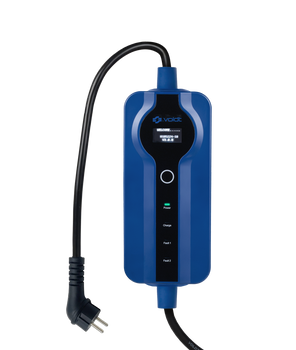
Mobile chargers—even high-performance models connected via a CEE plug—are classified as mobile appliances rather than fixed installations. Because they are designed to be plugged in and unplugged rather than hardwired, they do not currently fall under the scope of §14a EnWG. Consequently, mobile charging solutions are exempt from the mandatory power reduction (throttling) requirements that apply to fixed wallboxes, ensuring consistent charging performance without intervention from the grid operator.
For the user, this translates to a massive practical advantage: zero bureaucracy. Unlike fixed wallboxes, which often trigger mandatory registration forms, approval waiting periods, and network operator oversight, a mobile charger requires none of this. You simply plug it in and charge at full capacity immediately. It cuts through the red tape entirely, giving you the power of a wallbox with the simplicity of a household appliance.
Who Is This Information Relevant For?
This information is particularly relevant for EV owners in Germany who are planning a new home charging installation, upgrading from a household socket to a wallbox, or comparing different charging solutions. It is also relevant for installers and planners working with residential EV charging infrastructure.
Understanding §14a EnWG at an early stage helps avoid delays, unexpected requirements, or additional costs during installation and grid registration.
§14a EnWG in the Context of Future-Proof Charging
§14a EnWG is not a restriction on electric mobility. It is a structural measure designed to ensure that the continued growth of EVs does not compromise grid reliability. Most users will never actively notice its effects, yet the system benefits from increased resilience and predictability.
As EV charging across Europe becomes more standardised, long-term reliability, compliance, and technical transparency play an increasingly important role. With the right charging setup and a clear understanding of the regulatory framework, §14a EnWG becomes a manageable and logical part of everyday EV charging in Germany.