


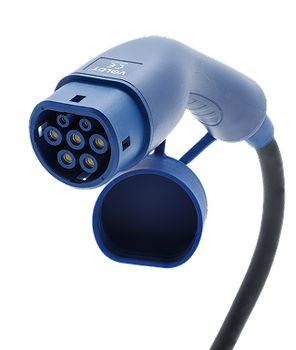

Audi Q3 TFSI PHEV charging cable
Audi Q3 TFSI PHEV Charging capacity
The Audi Q3 TFSI PHEV has a charging capacity of 3.7kW, so we recommend a charging cable rated for at least 3.7kW to charge at the car's full speed.
A 22kW cable can also charge this car at its full 3.7kW, and it is ready for a future car that accepts more.


Meet the Voldt® Portable EV charger
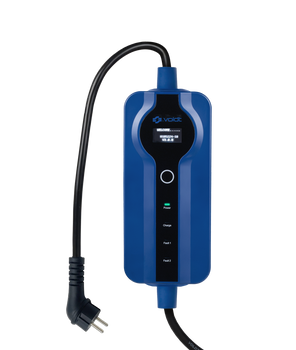
Meet the Voldt® Portable EV charger for your Audi Q3 TFSI PHEV
Charge at full speed (17km/h) from any electrical socket
Easily control and monitor your charging process in real time via your smartphone
Up to 60% faster charging at a household socket


Made in Europe

Keep you cable clean off the ground

Keep you cable clean off the ground


Audi Q3 TFSI PHEV
| Charging capacity | 3.7kW |
| Electric range | 51km/h |
| Phases | 1 Phase |
| Type | Type 2 |
| Capacity | 13kWh |
| Charging time | 2:30hours |
Complete your charging setup

Audi Q3 TFSI PHEV charging cable
has a charging capacity of 3.7kW, so we recommend a charging cable rated for at least 3.7kW to charge at the car's full speed.

EV Charging best practices
A 22kW cable can also charge this car at its full 3.7kW, and it is ready for a future car that accepts more.
Not sure which cable you need?

For questions or general inquiries, please leave your contact information below and we will get back to you as soon as possible.
Audi Q3 TFSI PHEV charging cable
Audi Q3 TFSI PHEV Connector type:
The Audi Q3 TFSI PHEV uses a Type 2 connector for charging at charging poles/wallboxes and power sockets. The charging cables we show above all have the correct Type 2 for your Audi Q3 TFSI PHEV.
Audi Q3 TFSI PHEV Mobile versus fixed charging:
The Audi Q3 TFSI PHEV is best charged through a charging station/wallbox or through a wall socket. This can be a household socket or a CEE power outlet. The advantage of charging via a socket versus a charging station/wallbox is that it has lower purchase costs. The advantage of charging via a charging station/wallbox is that Many modern charging stations offer 'smart' features such as load balancing, remote monitoring, and integration with energy management systems. This can be useful for both households and businesses.
Audi Q3 TFSI PHEV Charging speed:
The Audi Q3 TFSI PHEV can handle up to 16A- 1 phase charging. This makes the maximum charging capacity 3,7kW. Be aware that most cars already come with a mobile charging cable for household sockets. However, these cables only deliver a 2,3kW capacity, allowing only slower charging speeds.

Discover the range and charging capabilities of the Audi Q3 TFSI PHEV
The Audi Q3 TFSI PHEV, a car with a battery capacity of 13kWh, this delivers a WLTP range of between 51km/h according to the WLTP standard. WLTP, which stands for "Worldwide Harmonised Light Vehicles Test Procedure", is an international standardised test procedure to measure the fuel consumption and emissions of light vehicles.
The Audi Q3 TFSI PHEV is equipped with a 1 phase 16A charging system. This allows it to charge at a speed of 10km/h. That translates into a full charge time of 2:30hours, from 0% to 100%. This is due to its maximum charging capacity of 3,7kW and maximum amperage of 16A.
Connecting your Audi Q3 TFSI PHEV to a charging station or outlet
Important for Audi Q3 TFSI PHEV owners is the connector type. The car uses a type 2 connector. This type is ideal for charging at various charging stations, wallboxes and even standard sockets. Choosing a charging point may vary depending on your needs. A standard household socket or a CEE socket may be convenient because of its lower purchase cost. In contrast, many modern charging stations offer 'smart' features such as load balancing, remote monitoring and integration with energy management systems. These features can be beneficial for both households and businesses.For those considering buying a charging cable for the Audi Q3 TFSI PHEV, or simply looking for more information on the best way to charge this electric car, it is essential to know the compatibility and specifications well. And with the above details, you are already well on your way. When looking for the perfect charging cable for your Audi Q3 TFSI PHEV in our webshop, you can rely on these details to make the right choice.
