



Key Points
-
750W charging is extremely slow by modern EV standards, typically adding only around 3–5 km of range per hour, making it suitable mainly for small top-ups or long parking periods rather than full battery charging.
-
Household sockets can support low-power charging, but they are not designed for continuous high loads, and proper protection such as a dedicated circuit, RCD protection, and certified charging equipment remains essential.
-
Portable Mode 2 chargers offer a safer and more controlled alternative to direct socket charging, with adjustable current settings and integrated safety features aligned with European standards.
-
Extension cords increase electrical risk, adding resistance and potential overheating, and are considered temporary tools rather than reliable long-term charging infrastructure.
-
750W charging works only in specific scenarios, such as plug-in hybrids, very low daily mileage, or temporary setups, while most full EV drivers require higher charging power for practical daily mobility.
Introduction: Limited charging power at home
Across Europe, many EV drivers face the same challenge. They have access to electricity, but not to high charging power. This is common in apartment buildings, older homes, shared parking areas, or temporary living situations. Installing a wallbox is not always possible, permitted, or financially attractive. As a result, some drivers look at very low charging power levels such as 750W as a workaround. This article explains what charging at 750W realistically delivers, how it fits within European electrical standards, and where its practical limits lie. The focus is on safety, efficiency, and everyday usability rather than maximum charging speed.
Who is this relevant for?
This information is especially relevant for EV and plug-in hybrid drivers without access to a wallbox, people living in apartments or rental properties, drivers with low daily mileage, anyone relying on household sockets or portable charging solutions, and EV owners looking for a temporary or backup charging method. For drivers who regularly need fast overnight charging, low-power solutions are usually not sufficient.
What does 750W EV charging mean in practice?
Charging at 750W is extremely slow by modern EV standards. On a 230V single-phase supply, this equals roughly 3.3A. In real-world conditions, this typically adds about 3km to 5km of driving range per hour, depending on vehicle efficiency and temperature. To put this into perspective, a common European wallbox delivers 7.4kW or 11kW. That is more than ten times the power. Charging a 55kWh battery from near empty at 2.3kW already takes about 24 hours. At 750W, the same energy transfer would take several days. This makes 750W charging unsuitable for full battery charging and limits it to small top-ups or long parking periods.
Household sockets and European electrical realities
Household sockets are widely available across Europe and are often the first option considered for low-cost charging. While many sockets are rated at 16A and 230V, they are not designed for continuous high loads over many hours. For EV charging, limiting the current to 8A or 10A is generally advised, resulting in charging power between 1.8kW and 2.3kW. Running at 750W places less stress on the socket, wiring, and connectors, but it does not remove all risks. European electrical safety standards emphasize continuous-load behavior, temperature buildup, and proper protection. A dedicated circuit, residual current protection, and certified charging equipment remain essential.
Portable Mode 2 charging as a controlled alternative
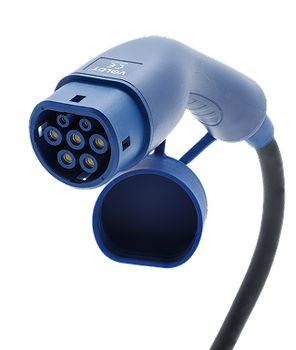
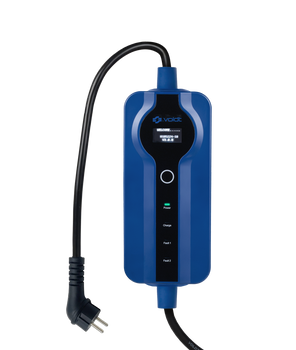
Instead of uncontrolled socket charging, many European drivers rely on portable Mode 2 charging solutions. These systems include an in-cable control box that manages communication with the vehicle and monitors electrical safety. Most allow manual current selection, often starting at 6A, which makes charging around 750W technically possible. From a European engineering perspective, this approach offers predictability and protection. Features like temperature monitoring, residual current detection, and automatic shutdown align with the expectation that EV charging should remain safe even when infrastructure is basic. While still slow, portable Mode 2 solutions bridge the gap between household sockets and fixed charging stations.
Extension cords as a structural weak point
Extension cords are a frequent source of charging problems. They add connection points, increase resistance, and raise the risk of overheating during long charging sessions. Many are designed for short-term or intermittent use rather than continuous electrical loads. European electrical guidance generally treats extension cords as temporary tools, not permanent infrastructure. Even when rated for sufficient current, improper use such as partial unwinding or outdoor exposure increases risk. From a long-term perspective, reducing cable length and connection points is always safer than extending them.
Cost considerations and long-term efficiency
The appeal of low-power charging lies mainly in its low entry cost. Using existing sockets and portable equipment avoids installation expenses. However, very low charging currents can reduce efficiency in some vehicles, leading to higher relative energy losses. European charging design increasingly focuses on balance. Not just speed, but efficiency, safety, and durability. While low-power solutions can be a practical starting point, they are best seen as transitional or supplemental rather than permanent charging strategies.
Conclusion
750W EV charging can work in very specific scenarios, particularly for plug-in hybrids, vehicles with very low daily mileage, or temporary parking situations. However, for most fully electric vehicles used regularly, higher charging power is essential for practical daily mobility. Low-power charging is not about maximizing speed. It is about understanding technical limits, maintaining safety standards, and choosing a solution that realistically matches your driving pattern.